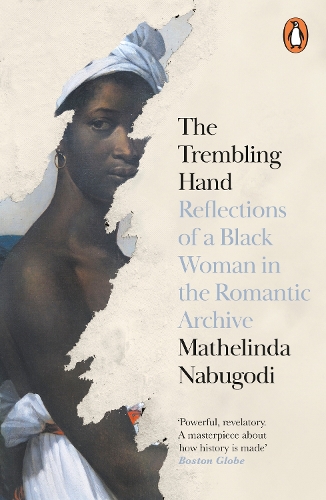
Bracing and essential, a radical reframing of British Romanticism through the lens of Black experience – for fans of David Olusoga, Gretchen Gerzina, Saidiya Hartman and Emma Dabiri
‘A masterpiece about how history is made, written with power and ferocity’ Boston Globe
Wordsworth, Shelley, Byron, Keats – the Romantic poets are titans of English literature, taught and celebrated around the world. Their writings are associated with the sublime power of nature and revolutionary politics. But these literary icons also lived through the climax of the transatlantic slave economy. They witnessed both the explosion of the abolition movement - and the reactionary formation of white supremacist ideologies.
The Trembling Hand examines how the lives and works of six major Romantic authors were entangled with the racial politics of their era. Mathelinda Nabugodi studies manuscripts and archival treasures – a teacup, a baby rattle, a lock of hair – to recover startling links between the poetry of freedom and the practices of slavery in the Romantic period.
‘Urgent . . . One will never look at these poets in quite the same way’ The New York Times
‘Ambitious and ingenious, Mathelinda Nabugodi engages the reader in the quest to re-see, re-imagine and re-read the past’ Colm Tóibín
"Propelled by a voice that is urgent, exasperated and eager to share what it knows… Her account of Byron shows why she wrote this book, and also her ability to argue with herself, to dramatize her own doubts. That’s a rare gift for any critic… [Her] passion, and [her] learning, ensure that one will never look at these poets in quite the same way" - The New York Times
"Powerful, revelatory... Mathelinda Nabugodi performs what she calls “an act of historical recovery,” re-examining British Romanticism’s beloved literary superstars through the debris they left behind... A masterpiece about how history is made, maintained, and remembered, while also including what history forgot — with trembling hands, she admits — and with power and ferocity" - Boston Globe
"An intimate and singular perspective on the Romantics—and race" - Kirkus Reviews