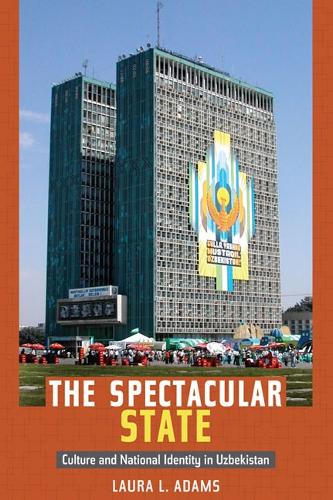
Книга The Spectacular State: Culture and National Identity in Uzbekistan
Examines the ways that cultural elites were mobilized as part of Uzbekistan's nation-building project in the early years of independence, and how institutional and cultural restraints on nation building now function.
Laura L. Adams offers unique insight into nation building in Central Asia during the post-Soviet era through an exploration of Uzbekistan’s production of national culture in the 1990s. As she explains, after independence the Uzbek government maintained a monopoly over ideology, exploiting the remaining Soviet institutional and cultural legacies. The state expressed national identity through tightly controlled mass spectacles, including theatrical and musical performances. Adams focuses on these events, particularly the massive outdoor concerts the government staged on the two biggest national holidays, Navro’z, the spring equinox celebration, and Independence Day. Her analysis of the content, form, and production of these ceremonies shows how Uzbekistan’s cultural and political elites engaged in a highly directed, largely successful program of nation building through culture.
Adams draws on her observations and interviews conducted with artists, intellectuals, and bureaucrats involved in the production of Uzbekistan’s national culture. These elites used globalized cultural forms such as Olympics-style spectacle to showcase local, national, and international aspects of official culture. While these state-sponsored extravaganzas were intended to be displays of Uzbekistan’s ethnic and civic national identity, Adams found that cultural renewal in the decade after Uzbekistan’s independence was not so much a rejection of Soviet power as it was a re-appropriation of Soviet methods of control and ideas about culture. The public sphere became more restricted than it had been in Soviet times, even as Soviet-era ideas about ethnic and national identity paved the way for Uzbekistan to join a more open global community.
"“Adams’s book makes an impressive contribution to the sociological literature on nationalism and state power in the post-Soviet world. . . . An ambitious and significant book that should be of great interest to scholars working in all areas of political sociology.”" - American Journal of Sociology
"“Into the dreadfully understudied and undertheorized literature on Central Asia since the Soviet collapse in 1991, Laura Adams has contributed what may be the best ethnographically grounded and conceptually sophisticated monograph to date. . . . This readable monograph is excellently suited for teaching in graduate and upper-level undergraduate courses on Central Asia, ex-socialist societies, nationalisms, and the anthropology of the state. It stands almost alone in providing a nuanced, on-the-ground glimpse of culture and politics of a fascinating yet poorly documented society.”" - American Anthropologist
"“The Spectacular State is a rich and ethnographically nuanced study of cultural production in Uzbekistan’s first decade of independence. It provides a sophisticated account of the place of mass spectacle in the articulation of
national ideology and the ambivalent role of cultural elites in sustaining and reproducing a myth of popular participation.The text is lucid and the ethnography engaging. As such, The Spectacular State makes a significant contribution to a comparative sociology of cultural production in authoritarian regimes and deserves to be widely read by students of Central Asia.”" - Sociological Review
"“This monograph contributes to a broader literature on construction of the state in post-Soviet contexts, and at the same time presents a thick description that area studies scholars will find appealing.”" - Slavic Review