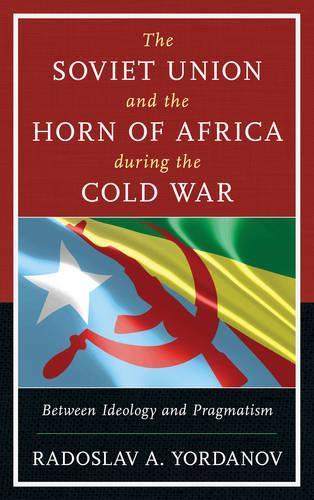
Книга The Soviet Union and the Horn of Africa during the Cold War: Between Ideology and Pragmatism
At the height of the Cold War, Soviet ideologues, policymakers, diplomats, and military officers perceived the countries of Africa, Asia, and Latin America as the future reserve of socialism, holding the key to victory over Western forces. The zero-sum nature of East-West global competition induced the United States to try to thwart Soviet ambitions. The result was predictable: the two superpowers engaged in proxy struggles against each other in faraway, little-understood lands, often ending up entangled in protracted and highly destructive local fights that did little to serve their own agendas. Using a wealth of recently declassified sources, this book tells the complex story of Soviet involvement in the Horn of Africa, a narrowly defined geographic entity torn by the rivalry of two large countries (Ethiopia and Somalia), from the beginning of the Cold War until the demise of the Soviet Union. At different points in the twentieth century, this region—arguably one of the poorest in the world—attracted broad international interest and large quantities of advanced weaponry, making it a Cold War flashpoint. The external actors ultimately failed to achieve what they wanted from the local conflicts—a lesson relevant for U.S. policymakers today as they ponder whether to use force abroad in the wake of the unhappy experiences in Iraq and Afghanistan.
"The author delves deeply into available post–Cold War Russian and East European archives to present a thorough nuanced study of an aspect of Soviet policy in the developing world, namely in the strategically located Horn of Africa. Yordanov (Columbia) takes the correct approach to understanding such policies by analyzing them at local, regional, and global levels. Including useful insights on internal Soviet bureaucratic and political decision making, he also reminds us how Moscow utilized its East European allies to help implement competition at America’s expense, a gradualist approach valuing stability and predictability over direct confrontation or ideological extremes. Over time, the Americans and Soviets shifted clients between Ethiopia and Somalia showing how realpolitik was practiced in the region; it was a tug-of-war era in which Third World leaders sought to extract concessions from competing powers while not falling completely under their control. The author might have said more about how the Cold War experience set the stage for today’s regional instability. Summing Up: Recommended. Upper-division undergraduates through professionals." - CHOICE
"The broadening of our perspective constitutes the most important plus of Yordanov’s intensive research. By embedding the dramatic culmination in a multi-perspective analysis of its pre-history and long-term impacts on Soviet-east African relations, the study enriches our understanding of the twisted development of Soviet Third World politics under changing international and domestic conditions. . . By underlining the varying shades and subtle distinctions that marked Soviet approaches toward single Third World countries and societies at different times, this book highlights the importance of concrete case studies and warns against premature generalizations concerning Soviet strategies." - Slavic Review