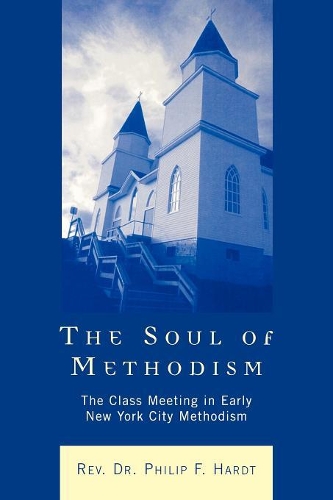
A weekly 'class meeting' among Methodists in early 19th-century New York formed the basis for growth and unity in the small Christian sect. Author Rev. Dr. Philip F. Hardt describes these meetings as a means to close personal relationships among class members. They also provided a place in which lay leadership could emerge and monitor behavior among members. Hardt connects the decline in Methodist membership over the years with the dissolution of the weekly meeting. This book advocates a return to the meetings as a means to increase church membership. It is Rev. Hardt's belief that a weekly meeting can revitalize the church's efforts to initiate people into the faith and assimilate them into the body of Christ.
"Hardt's work is a detailed account of the decline of the class meeting in New York City, and provides exacting evidence. . . for what Methodist scholars have long assumed, but few have endeavored to prove." - Evangelical Journal
"The Soul of Methodism provides readers with the dual opportunity to recapture the inspiration generated in the intimate class meeting setting and mourn the significant loss of spiritual momentum that once propelled Methodism as a movement." - United Methodist Men's Magazine
"Hardt sees the class meeting as the essence of Wesley's method of nurturing disciples, bringing them to conversion and setting them on the road to holiness...Dr. Hardt's local research here is exhaustive and fascinating..." - Methodist Recorder