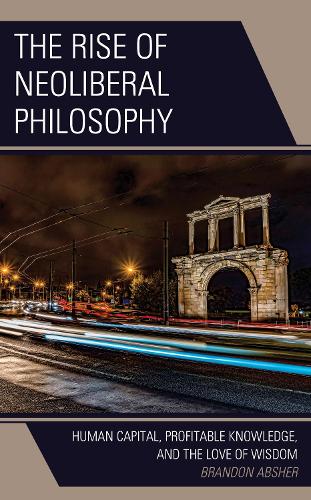
In The Rise of Neoliberal Philosophy: Human Capital, Profitable Knowledge, and the Love of Wisdom, Brandon Absher argues that the neoliberal transformation of higher education has resulted in a paradigm shift in philosophy in the United States, leading to the rise of neoliberal philosophy. Neoliberal philosophy seeks to attract investment by demonstrating that it can produce optimal return. Further, philosophers in the neoliberal paradigm internalize and reproduce the values of the prevailing social order in their work, reorienting philosophical desire toward the production of attractive commodities. The aim of philosophy in the neoliberal university, Absher shows, has become the production of human capital and profitable knowledge.
"
Absher’s writing is clear and his argumentation is solid. The focus of most books on neoliberalism and academia is on the university in general, but Absher narrows the attention to the discipline of philosophy. For philosophers this brings the analysis much closer to home. It enables the author to turn a critical eye to the language and practices of key institutional powerbrokers like the philosophical gourmet and the APA…. As Absher correctly notes, neoliberalism tends to suck everything into itself. Frankly it is not clear that academic philosophers have the integrity to do what needs to be done. Further analysis is needed on why not: if philosophers are thinkers, why does there seem to be so much thoughtlessness and inaction about neoliberalization? Of course, that the book leads to further questions is an indication that it is asking important ones. Hopefully it will be widely read and inspire change.
" - Radical Philosophy Review