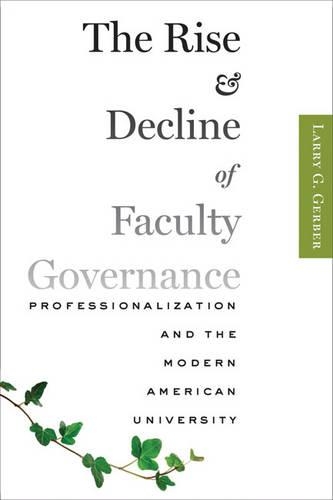
Книга The Rise and Decline of Faculty Governance: Professionalization and the Modern American University
Even the end of the world needs a historian, and with this book, Larry Gerber has made himself the official historian of the end of the academic world. -- Benjamin Ginsberg, author of The Fall of the Faculty: The Rise of the All-Administrative University and Why It Matters The Rise and Decline of Faculty Governance is rooted in a thorough knowledge of the historical development of and challenges to the role of American university and college faculties in the governance of their institutions. Larry Gerber asks all the right questions. A must-read in any course on the history of American higher education and an invaluable point of reference for historians and for sociologists specializing in organizational theory. -- Lawrence Poston, University of Illinois at Chicago
The Rise and Decline of Faculty Governance is the first history of shared governance in American higher education. Drawing on archival materials and extensive published sources, Larry G. Gerber shows how the professionalization of college teachers coincided with the rise of the modern university in the late nineteenth century and was the principal justification for granting teachers power in making educational decisions. In the twentieth century, the efforts of these governing faculties were directly responsible for molding American higher education into the finest academic system in the world. In recent decades, however, the growing complexity of "multiversities" and the application of business strategies to manage these institutions threatened the concept of faculty governance. Faculty shifted from being autonomous professionals to being "employees." The casualization of the academic labor market, Gerber argues, threatens to erode the quality of universities. As more faculty become contingent employees, rather than tenured career professionals enjoying both job security and intellectual autonomy, universities become factories in the knowledge economy. In addition to tracing the evolution of faculty decision making, this historical narrative provides readers with an important perspective on contemporary debates about the best way to manage America's colleges and universities. Gerber also reflects on whether American colleges and universities will be able to retain their position of global preeminence in an increasingly market-driven environment, given that the system of governance that helped make their success possible has been fundamentally altered.