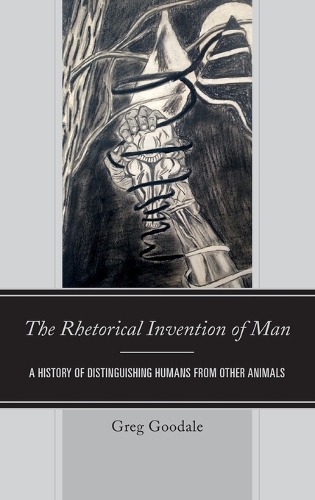
Книга The Rhetorical Invention of Man: A History of Distinguishing Humans from Other Animals
This book draws attention to the logical contradictions, unstable premises, and unquestioned assumptions that underlie arguments about Man’s distinction, while also demonstrating that the way we think about nonhuman animals is only one possibility among many. Vestiges of older ways of thinking continue to inform our understanding of the human-nonhuman animal relationship, disturbing the simple narrative that Man has mastered nature. The reader will additionally find here a history that illuminates popular attitudes toward nature as well as intellectual traditions about the relationship between Man and other animals. As a result, each chapter is an overview of how the past continues to inform the present. The chapters, then, move back and forth between ancient ideas like the myths of Prometheus and Orpheus, Age of Reason philosophers like Francis Bacon and Immanuel Kant and modern practices like petkeeping and vivisection.
"In this stimulating book, Greg Goodale pursues a campaign against a centuries-old and persistent rhetorical construct, “Man.”.... Goodale has tackled a fascinating subject in interesting and productively offbeat ways." - Isis
"Goodale demonstrates that the interdisciplinary fıeld of animal studies is a fıt and fascinating companion for rhetorical studies…. Grammarians, classicists, and historians of rhetoric will fınd themselves taking a new look at familiar territory when Goodale leads them on a tour of canonical texts, examining translations of pronouns referencing human and nonhuman agents and strategic uses of passive voice. Historians and philosophers of science will be drawn to his history of science as an epistemology shaped by the logic of distinctions, and animal studies scholars from the humanities will appreciate his careful and convincing deconstruction of anthropocentric reasoning about Man’s place in the natural order. Potentially the book’s most valuable contribution, however, is to environmental ethics…. Because its argument so clearly illuminates the limitations and distortions of human rationality that have brought us to the so-called Anthropocene, this book is relevant to readers far beyond rhetorical studies." - Rhetoric & Public Affairs