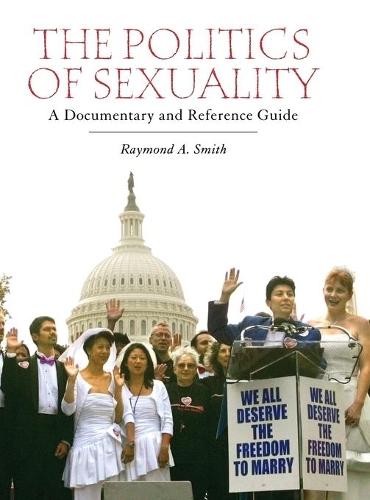
Книга The Politics of Sexuality: A Documentary and Reference Guide
"This judicious and definitive source on the legal regulation of sexuality in the United States is a "must buy" publication for all libraries and universities. Dr. Smith is to be congratulated for his astute archival scholarship and for providing an excellent selection and analysis of such a wide range of source documents, which in its entirety provides a rich history of the sexual politics in the U.S. since 1965. Beautifully organized and clearly written, this reference guide is appropriate for use at both the undergraduate and upper grade levels of secondary education." -- Diane di Mauro, Ph.D., Columbia University, Faculty, Sociomedical Sciences Dept.; Associate Editor of Sexuality Research and Social Policy
Since the landmark 1965 Supreme Court ruling Griswold v. Connecticut established a Constitutional right to privacy, the regulation of sexuality has become an extremely volatile area of American politics. From reproductive rights to sex education, pornography to gay marriage, the balance between community norms and individual autonomy has been fiercely contested. These and related subjects are often viewed in isolation, as though they were entirely separate issues. Yet as the documentary record makes clear, they are in fact closely interrelated, and their impact is cumulative. By addressing a broad array of topics at the intersection of sexuality and politics, this volume highlights the connections and makes an important contribution to a debate that touches every American.
Taking as a starting point the 1965 Griswold decision—sometimes said to have launched the sexual revolution—the approximately 100 primary source documents assembled here either mark watersheds in themselves or are representative of a broad range of political developments. The documents are drawn from all quarters of U.S. political life. They include legislative texts; proposed laws and constitutional amendments; state and federal court rulings; political party platforms; and interest-group position statements.