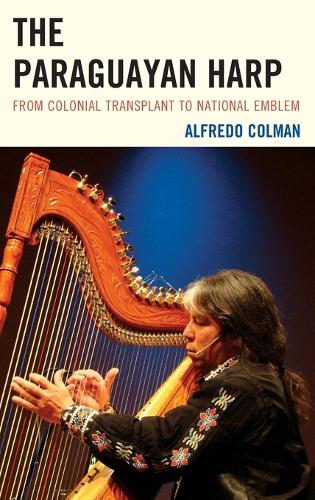
Книга The Paraguayan Harp: From Colonial Transplant to National Emblem
How did a music instrument transplated to South America by colonial Jesuit missionaries earn the official designation as Paraguay's cultural national symbol? This ethnomusicological and organological study of the Paraguayan diatonic harp in the twentieth century tells its story as an emblematic national musical instrument. First used liturgically by Jesuit missions in colonial times, the transplanted European diatonic harp was transformed and adopted into the folk music vocabulary of Paraguay and the Río de la Plata region. Following the commercial success of Paraguayan harpist Félix Pérez Cardozo in the 1930s in Argentina, the instrument's symbolic value as an icon of social, cultural, and national identity was articulated in local traditions such as popular folk music festivals. It received designation of arpa paraguaya (Paraguayan harp) and, in 2010, official recognition as simbolo de la cultura nacional (cultural national symbol). The author's fieldwork in Paraguay and continuous contact with composers, educators, festival organizers, harp performers, researchers, and festival organizers have provided unique insights into the development of the Paraguayan harp tradition as a cultural icon of the nation.
"Alfredo Colman’s book is written with great clarity, sprinkled with many technical notes in beautiful Guaraní, the language of Paraguay’s native people. His in-situ knowledge and personal experience are essential because, in Latin America, information about music for the ‘lower income masses,’ with the exception of ceremonial religious music, has always been rather scarce. . . .Tracing the use of the harp in Paraguay among the Guaraní people, in the Jesuit reductions, and into the contemporary moment of official recognition, Colman’s exposition is well supported by relevant evidence throughout, and this highly recommended book makes a strong case that the harp is deservedly one of Paraguay’s national emblems." - Journal of Folklore Research