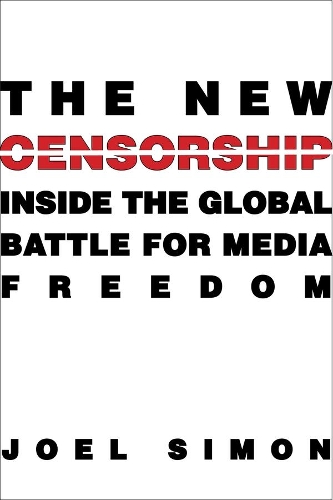
Книга The New Censorship: Inside the Global Battle for Media Freedom
Media freedom is under attack all over the world as Simon shows us in often hair-raising detail. Yet while the diagnosis is frightening the prognosis need not be fatal. Fortunately, Simon offers a practical road map for how media freedom can and must be defended-and even expanded. -- Rebecca MacKinnon, author Consent of the Networked. While climate change, persistent poverty, and sectarian violence typically top the list of the world's most urgent challenges, the progress of future generations also will depend upon the success we have in ensuring free speech across the globe. Simon understands like few others that without a free press, modern societies will be severely stymied in solving their problems. Through insightful analysis and gripping stories relaying the experiences of frontline journalists, he offers a compelling portrait of the fight for free expression occurring around the world. -- Lee C. Bollinger, president, Columbia University No one understands better than Simon the reasons that press freedom is now in decline nearly everywhere in the world. In The New Censorship, he brings us riveting and powerfully moving accounts from the front lines. For anyone who wants to understand the peril that independent media face around the world today, this is a distressing, essential piece of work. -- Jacob Weisberg, chairman, The Slate Group Journalists are increasingly, and at times tragically, becoming characters in their own stories. As the executive director of the Committee to Protect Journalists, Simon has the difficult task of advocating press freedom around the world and saving the many journalists whose lives are in peril. In his profound and entertaining book, Simon draws on years of experience dealing with censorship, its victims, and its perpetrators. -- Maziar Bahari, journalist, filmmaker, and author of And Then They Came for Me
Journalists are being imprisoned and killed in record numbers. Online surveillance is annihilating privacy, and the Internet can be brought under government control at any time. Joel Simon, the executive director of the Committee to Protect Journalists, warns that we can no longer assume that our global information ecosystem is stable, protected, and robust. Journalists are increasingly vulnerable to attack by authoritarian governments, militants, criminals, and terrorists, who all seek to use technology, political pressure, and violence to set the global information agenda. Reporting from Pakistan, Russia, Turkey, Egypt, and Mexico, among other hotspots, Simon finds journalists under threat from all sides. The result is a growing crisis in information-a shortage of the news we need to make sense of our globalized world and fight human rights abuses, manage conflict, and promote accountability. Drawing on his experience defending journalists on the front lines, he calls on "global citizens," U.S. policy makers, international law advocates, and human rights groups to create a global freedom-of-expression agenda tied to trade, climate, and other major negotiations. He proposes ten key priorities, including combating the murder of journalists, ending censorship, and developing a global free-expression charter to challenge the criminal and corrupt forces that seek to manipulate the world's news.