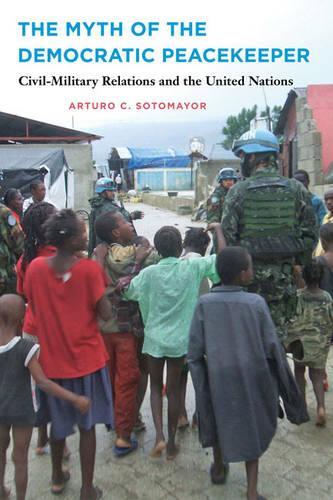
Книга The Myth of the Democratic Peacekeeper: Civil-Military Relations and the United Nations
United Nations Peacekeeping Operations were long thought to have a uniform, salutary effect on participating soldiers from democratizing states. Sotomayor's penetrating, comparative study of Argentina, Uruguay and Brazil reveals instead how peacekeeping may simply reinforce customary practices, to the detriment of military professionalization and civil-military relations back home. This myth-shattering book will be the standard reference on Latin American peacekeepers for years to come. -- David Pion-Berlin, University of California, Riverside The Myth of the Democratic Peacekeeper carefully assesses one of the fondest hopes of UN peacekeeping: that the peacekeepers, once they return home, will bring with them the rule of law, democratic values, and the civil-military integration they sought to implement in the peacekeeping operation. Sotomayor's well-researched case studies of the peacekeepers from Argentina, Brazil, and Uruguay demonstrate that such hopes were and still are exaggerated. Peacekeeping leaves a civilianizing legacy, but not one as deep as the optimists hoped. -- Michael W. Doyle, Columbia University Finally, a book that effectively unpacks the black box of peacekeeping missions to explain how they impact the militaries that participate in them. Focusing on the major peacekeeping contributors from Latin America, Sotomayor challenges the assertion that participation in peacekeeping is always a good way to enhance military professionalism and civilian control of the military. His extensive participant-observation and interview work provide an empirically rich and nuanced portrait with important implications for achieving military reform in post-authoritarian democracies. A must-read, both for scholars who study the armed forces and for practitioners who see participation in peacekeeping missions of any stripe as a solution to the challenges of military reform. -- Kristina Mani, Oberlin College
The Myth of the Democratic Peacekeeper reevaluates how United Nations peacekeeping missions reform (or fail to reform) their participating members. It investigates how such missions affect military organizations and civil-military relations as countries transition to a more democratic system. Two-thirds of the UN's peacekeepers come from developing nations, many of which are transitioning to democracy as well. The assumption is that these "blue helmet" peacekeepers learn not only to appreciate democratic principles through their mission work but also to develop an international outlook and new ideas about conflict prevention. Arturo C. Sotomayor debunks this myth, arguing that democratic practices don't just "rub off" on UN peacekeepers. So what, if any, benefit accrues to these troops from emerging democracies? In this richly detailed study of a decade's worth of research (2001-2010) on Argentine, Brazilian, and Uruguayan peacekeeping participation, Sotomayor draws upon international socialization theory and civil-military relations to understand how peacekeeping efforts impact participating armed forces. He asks three questions: Does peacekeeping reform military organizations? Can peacekeeping socialize soldiers to become more liberalized and civilianized? Does peacekeeping improve defense and foreign policy integration? His evaluation of the three countries' involvement in the UN Stabilization Mission in Haiti reinforces his final analysis - that successful democratic transitions must include a military organization open to change and a civilian leadership that exercises its oversight responsibilities. The Myth of the Democratic Peacekeeper contributes to international relations theory and to substantive issues in civil-military relations and comparative politics. It provides a novel argument about how peacekeeping works and further insight into how international factors affect domestic politics as well as how international institutions affect democratizing efforts.