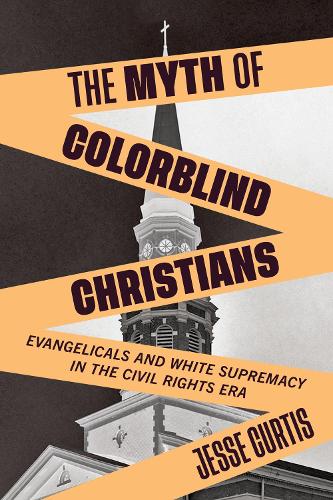
Книга The Myth of Colorblind Christians: Evangelicals and White Supremacy in the Civil Rights Era
Reveals how Christian colorblindness expanded white evangelicalism and excluded Black evangelicals
In the decades after the civil rights movement, white Americans turned to an ideology of colorblindness. Personal kindness, not systemic reform, seemed to be the way to solve racial problems. In those same decades, a religious movement known as evangelicalism captured the nation’s attention and became a powerful political force. In The Myth of Colorblind Christians, Jesse Curtis shows how white evangelicals’ efforts to grow their own institutions created an evangelical form of whiteness, infusing the politics of colorblindness with sacred fervor.
Curtis argues that white evangelicals deployed a Christian brand of colorblindness to protect new investments in whiteness. While black evangelicals used the rhetoric of Christian unity to challenge racism, white evangelicals repurposed this language to silence their black counterparts and retain power, arguing that all were equal in Christ and that Christians should not talk about race.
As white evangelicals portrayed movements for racial justice as threats to Christian unity and presented their own racial commitments as fidelity to the gospel, they made Christian colorblindness into a key pillar of America’s religio-racial hierarchy. In the process, they anchored their own identities and shaped the very meaning of whiteness in American society. At once compelling and timely, The Myth of Colorblind Christians exposes how white evangelical communities avoided antiracist action and continue to thrive today.
"Curtis eschews the world of formal politics and shows how the evangelical gospel of colorblindness was forged in more private spaces: homes, schools, and churches. Particularly interesting is his discussion of how the church growth movement emerged from the context of the civil rights movement." - Christian Century Book Review
"In six tightly paced chapters, plus an introduction and conclusion, Curtis details the origins of evangelical colorblindness and how it manifested itself in the movement’s core institutions… he has written a powerful and provocative book that raises deep questions about the very nature of American evangelicalism." - Reading Religion