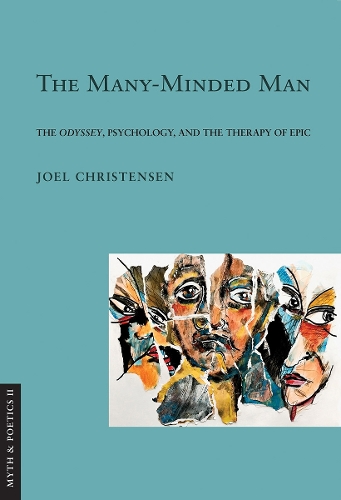
Книга The Many-Minded Man: The "Odyssey," Psychology, and the Therapy of Epic
In The Many-Minded Man, Joel Christensen explores the content, character, and structure of the Homeric Odyssey through a modern psychological lens, focusing on how the epic both represents the workings of the human mind and provides for its audiences—both ancient and modern—a therapeutic model for coping with the exigencies of chance and fate.
By reading the Odyssey as an exploration of the constitutive elements of human identity, the function of narrative in defining the self, and the interaction between the individual and their social context, The Many-Minded Man addresses enduring questions about the poem, such as the importance of Telemachus's role, why Odysseus must tell his own tale, and the epic's sudden and unexpected closure. Through these dynamics, Christensen reasons, the Odyssey not only instructs readers about how narrative shapes a sense of agency but also offers solutions for avoiding dangerous stories and destructive patterns of thought.
"
While the arguments are usually complex and intricate, Christensen has successfully achieved what he set out to do, thanks in part to his clear style and presentation. Attentive and contemplative readers will gain insights not only into the Odyssey but also into their own experiences.
" - Choice"
Joel Christensen shows that he has thoroughly digested not only the vast field of Classics – specifically Homeric scholarship – but also the equally immense realm of human psychology, although he modestly denies the latter. [H]e offers a deeply personal study, one that emphasizes process over product in a way that seems quite appropriate to both the Odyssey and modern psychology.
" - The Classical Journal