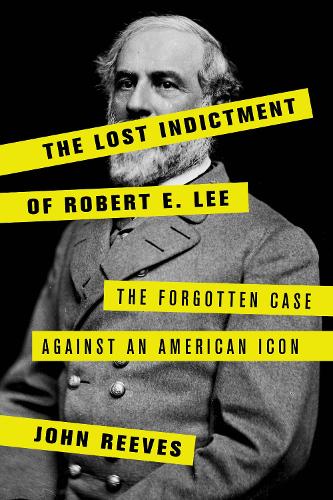
Книга The Lost Indictment of Robert E. Lee: The Forgotten Case against an American Icon
History has been kind to Robert E. Lee. Woodrow Wilson believed General Lee was a “model to men who would be morally great.” Douglas Southall Freeman, who won a Pulitzer Prize for his four-volume biography of Lee, described his subject as “one of a small company of great men in whom there is no inconsistency to be explained, no enigma to be solved.” Winston Churchill called him “one of the noblest Americans who ever lived.” Until recently, there was even a stained glass window devoted to Lee's life at the National Cathedral in Washington, D.C. Immediately after the Civil War, however, many northerners believed Lee should be hanged for treason and war crimes. Americans will be surprised to learn that in June of 1865 Robert E. Lee was indicted for treason by a Norfolk, Virginia grand jury. In his instructions to the grand jury, Judge John C. Underwood described treason as “wholesale murder,” and declared that the instigators of the rebellion had “hands dripping with the blood of slaughtered innocents.” In early 1866, Lee decided against visiting friends while in Washington, D.C. for a congressional hearing, because he was conscious of being perceived as a “monster” by citizens of the nation’s capital. Yet somehow, roughly fifty years after his trip to Washington, Lee had been transformed into a venerable American hero, who was highly regarded by southerners and northerners alike. Almost a century after Appomattox, Dwight D. Eisenhower had Lee’s portrait on the wall of his White House office. The Lost Indictment of Robert E. Lee tells the story of the forgotten legal and moral case that was made against the Confederate general after the Civil War. The actual indictment went missing for 72 years. Over the past 150 years, the indictment against Lee after the war has both literally and figuratively disappeared from our national consciousness. In this book, Civil War historian John Reeves illuminates the incredible turnaround in attitudes towards the defeated general by examining the evolving case against him from 1865 to 1870 and beyond.
"In this well-crafted narrative, Reeves demystifies the Confederate general Robert E. Lee and the reasons he was given amnesty after the Civil War.... Reeves offers a timely portrait of how the cults of Lee and the states’ rights lost cause became firmly entrenched in American culture within only 25 years of the Civil War—and still haunt 21st-century debates over Confederate monuments and battle flags." - Publishers Weekly
"A provocative work of history and cultural analysis.... Mr. Reeves, a journalist and former history teacher, does an able job of untangling the shifting public sentiment, tactical misjudgments and legal ordeals that shaped the indictment and ultimately crippled it." - The Wall Street Journal
"Perhaps nothing demonstrated the unwillingness of Americans to come to terms with the bloody history of 1861–1865 so well as their veneration of Robert E. Lee. For decades (and without a sense of irony), northerners and southerners acclaimed the commander of the Army of Northern Virginia as an authentic national hero. . . . John Reeves’ new book, however, “tells the story of the forgotten legal and moral case that was made against the Confederate general in the days after the Civil War.” In his lively and accessible narrative, Reeves relates “the history Americans tried to forget.”" - New York Journal of Books
"“Reeve’s study of the abortive Lee treason prosecution offers fresh insight into the tortured ending of the Civil War, the movement toward white sectional reconciliation at the expense of African American rights, and the construction of the Lost Cause, of which Lee is both an essential figure and initial architect.”" - CHOICE
"John Reeves titled his introduction to this work “Reevaluating Robert E. Lee” but The Lost Indictment of Robert E. Lee is a reevaluation of many things. Reeves reevaluates Robert E. Lee after 1865, the attempted legal case against him and other former Confederates, and Lee’s views on slavery, the war, and Reconstruction. He also reevaluates Andrew Johnson’s role in punishing former Confederates, the attempt and failure to secure punishment against Confederate leaders, and the creation of the Lost Cause in the aftermath of the war. Overall, The Lost Indictment is a fascinating and enjoyable read that untangles many questions about the transition from war to peace after the destructive Civil War." - Civil Discourse