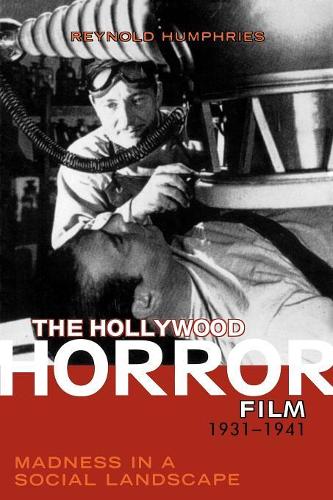
Книга The Hollywood Horror Film, 1931-1941: Madness in a Social Landscape
In February 1931, Universal Studios released Dracula, starring Bela Lugosi. As a result of the film's considerable—and unexpected—success, Universal and the other Hollywood studios quickly cashed in on this genre. In the following decade such classics as Freaks, Frankenstein, King Kong, White Zombie, The Mummy, The Wolfman, and Dr. Jekyll and Mr. Hyde, along with a number of lesser known but significant works, were produced. But these films tend to be neglected as a serious object of study. The main interest shown in them comes from fanzines whose critics often place the accent on the anecdotal at the expense of analysis. And serious studies undertaken by sociologists and specialists in cultural studies either prefer themes and content or choose to study the films as reflecting the concerns, albeit unconsciously, of the period. In The Hollywood Horror Film, 1931-1941: Madness in a Social Landscape, Reynold Humphries analyzes representative films of this era and discusses their impact upon audiences at the time. He evaluates what their success says about the society that consumed them and about the filmmakers who produced them—particularly the unconscious dimension of the films and their ideological ramifications. According to Humphries, prejudices of a social, racial, and sexual nature on the part of Hollywood's censors and the press went hand in hand with a sense of growing unease at what was being portrayed on the screen. Concentrating on abnormal and often sadistic acts, on an unbridled striving after power, and on the mad doctor/scientist's indifference to others, horror films of the era act out society's division along lines of class and economics. Brutal exploitation went beyond the monstrous acts of an individual to assume a social dimension where collective interests come to the fore by the way they are trampled on. One of the aims of this book is to pinpoint how the "political unconscious" of the films in question reveals points of contact
"Humphries has conclusively justified his rigorously promulgated thesis: because he regards psychoanalysis and Marxism as interdependent, he must employ both disciplines to any meaningful analyses of movies, especially of those horror movies of the 1930s." - Gothic Studies, November 2007
"During the period 1930-1941, horror classics such as Frankenstein, King Kong, and The Mummy were produced in Hollywood, along with a number of lesser-known but significant works. In this study, Humphries analyzes representative horror films of this era and discusses their impact on audiences of the time. Particular attention is paid to the subconscious dimension of the films and the ideologies they promote. Humphries teaches film studies at the U. of Lille in northern France." - Reference and Research Book News, November 2006
"...one of the most outstanding critical works in this area to have appeared in the first years of the twenty-first century." - The, November 3Rd Club
"...one of the most significant contributions to the understanding of American cinema of recent years." - Film Studies
"Each chapter delves deeply into its task of examining the seminal horror films of the period for their conscious and unconscious meanings from a variety of social science perspectives. Its theme forces the reader to engage in an internal dialogue about what is sacred and profane, titillating or obscene, horrifying or camp. Overtly, the book provides a police interrogation room for viewing the horror film audience while viewing the horror film. Covertly, the book also holds a mirror up to the readers and their own fragile or jaded sensibilities about the origins of 'horroritica' in film." - The Journal of the Fantastic in the Arts, Summer 2009 (Vol. 19.3)
"Humphries presents his project with engaging self-awareness, sometimes even presenting himself as a kind of mad scientist or doctor (a type of film character he discusses), "driven by an insatiable desire for truth and knowledge, noble sentiments that all too often lead to a rejection of society's most precious values (i.e. presuppositions)" (x)." - Film Quarterly, Winter 2009-2010