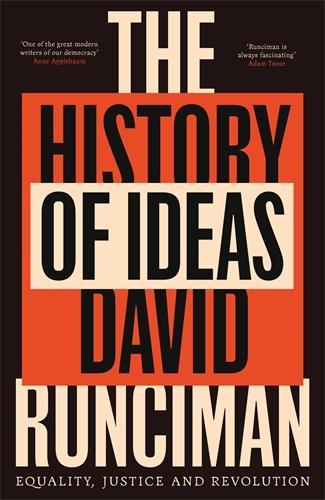
What is the history of ideas - and how has it shaped our world today?
THE TIMES BEST IDEAS BEST BOOKS OF THE YEAR 2024
'A splendid book: economical, invigorating and surprising' The Times
'He has that gift, both as a podcaster and as a writer, to illuminate abstruse and abstract ideas with human charm' Observer
In this bold new follow-up to Confronting Leviathan, David Runciman unmasks modern politics and reveals the great men and women of ideas behind it.
What can Samuel Butler's ideas teach us about the oddity of how we choose to organise our societies? How did Frederick Douglass not only expose the horrors of slavery, but champion a new approach to abolishing it? Why should we tolerate snobbery, betrayal and hypocrisy, as Judith Shklar suggested? And what does Friedrich Nietzsche predict for our future?
From Rousseau to Rawls, fascism to feminism and pleasure to anarchy, this is a mind-bending tour through the history of ideas which will forever change your view of politics today.
"Runciman is a superbly lucid and conversational guide - this is a perfect starting place for anyone who wants to get their teeth into the history of political philosophy" - The Times
"Timely ... [Runciman's] page-turning volume of essays - a study of intellectuals who sought to improve the politics and societies of their day - makes you feel a little more learned than you did before ... he has that gift, both as a podcaster and as a writer, to illuminate abstruse and abstract ideas with human charm" - Observer
"Timely ... important" - Irish Times
"Praise for Confronting Leviathan and David Runciman: 'Bracingly intelligent ... a wonderful read" - Guardian
"Incredibly timely ... wonderful elegance and clarity through which complex ideas are presented ... That the book helps make thinking about the state enjoyable is just the least of its many exceptional qualities" - Irish Times
"A brilliant introduction for anyone looking to engage with political debates beyond the headlines ... Excellent" - Herald
"In our time of Trump and Putin, the re-emergence of far-right fascism and the consolidation of global kleptocracy, the ideas Runciman explores have never been so pertinent" - The Irish Times