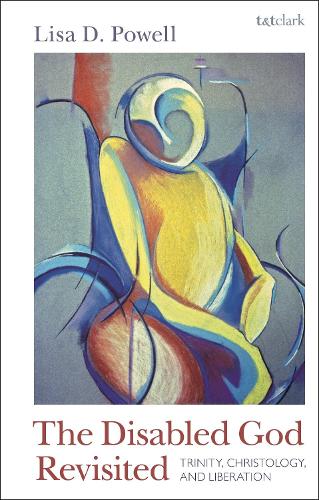
Expands Nancy Eiesland’s claim that God is disabled through the development of a doctrine of God and Christology, drawing from a range of theologies of liberation and contemporary debate in Barth studies on the Trinity.
Lisa D. Powell strengthens and amplifies the claim that God is disabled, made by Nancy Eiesland in her ground breaking book The Disabled God (1994). She offers an alternative understanding of the doctrine of God and the Trinity, resulting in a God who is not autonomous and utterly independent. According to this view, God’s triune identity is established in God’s decision for covenant, and thus creation is a requirement for the fulfillment of God’s nature - not only is the Son always anticipating full embodiment and human nature, but more specifically is eternally anticipating an impaired body. Powell argues that God is not only interdependent within the immanent Trinity, but God experiences real dependency, risk and vulnerability from God’s “original” self-determination.
Powell revisits Eiesland’s claim about Christ’s resurrected body and her conclusions about eschatological embodiment, arguing that it is the able-body that does not persist eschatologically, but all humanity journeys toward ever more transparency, vulnerability and interdependency as the Body of Christ.
"Powell has provided readers with a rich exploration in The Disabled God Revisited. Of course, in re-envisioning God, our sense of self is also reframed, insofar as disability is seen as received in the broken body of Christ in the Eucharist. This can be profoundly liberating for people with disabilities." - Canadian Lutheran Society