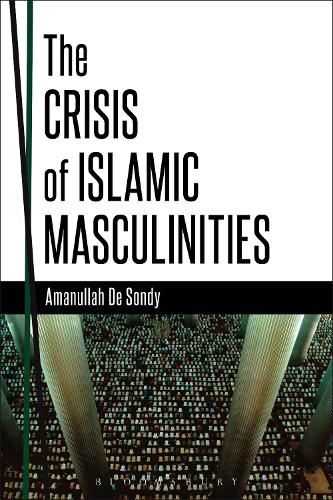
Книга The Crisis of Islamic Masculinities
Evaluates the idea of any singular, rigid, ideal Islamic masculinity, exploring key figures of the Qu'ran and Indian-Pakistani Islamic masculinity.
Discussions and debates surrounding Islamic masculinities are quickly finding their place in the study of Islam and Muslims. Now available in paperback, The Crisis of Islamic Masculinities makes a vital contribution to this emerging field. Rigid notions of masculinity are causing crisis in the global Islamic community. These are articulated from the Qur’an, its commentary, historical precedents and societal, religious and familial obligations. Some Muslims who don't agree with narrow constructs of manliness feel forced to consider themselves secular and therefore outside the religious community. In order to evaluate whether there really is only one valid, ideal Islamic masculinity, The Crisis of Islamic Masculinities explores key figures of the Qur’an and Indian-Pakistani Islamic history, and exposes the precariousness of tight constraints on Islamic manhood. By examining Qur’anic arguments and the strict social responsibilities advocated along with narrow Islamic masculinities, Amanullah De Sondy shows that God and women (to whom Muslim men relate but are different from) often act as foils for the construction of masculinity. He argues the constrainers of masculinity have used God and women to think with and to dominate through and that rigid gender roles are the product of a misguided enterprise: the highly personal relationship between humans and God does not lend itself to the organization of society, because that relationship cannot be typified and replicated.
"The Crisis of Islamic Masculinities shows how any notion of Muslim or Islamic masculinity is always constructed against a number of “others” – women, the West and God … This is an important work for those interested in gender relations in Muslim societies. I only wish that my students could read English because this work would help them to explore a broader range of gender constructions without the (fully justifiable) fear of being labelled un-Islamic." - Times Higher Education
"This book might be of interest to scholars working on various areas including but not limited to gender, Islam, and feminism. In summary, it is a useful book for the library." - Gender, Place & Culture: A Journal of Feminist Geography
"Ultimately, De Sondy does not aim to uncover one specific definition of true Islamic masculinity, but, rather, to explore the different ways in which Muslims have understood masculinity ... The Qur’anic chapter is particularly interesting, insofar as De Sondy feels that the Qur’an is inconclusive with respect to uncovering a single definition of masculinity, since many Qur’anic male figures – such as Adam, Jesus, Joseph, and the Prophet Muhammad – lived significantly different lives." - Journal of Shi'a Islamic Studies, 7.3
"The Crisis of Islamic Masculinities, provides a timely addition to the emergent field of masculinity studies ... De Sondy has produced an inclusive and pluralistic vision of Islamic masculinities that accommodates polar opposite exemplars such as Mawdudi and Mirza Ghalib, that argues that the diversity of Qur’anic masculine paradigms must themselves be taken as proof that Islam does not support a single model of masculinity, and which offers a cogent analysis of the multiple positions Muslim women feminists have adopted and the methods they have employed to remain “pro-faith” while debunking the hegemonic discourses of Islamic traditions ... A beautifully written ... and well documented study that should be read not only by those interested in gender in Islam but by anyone interested in gender and masculinity issues more broadly." - Society for Contemporary Thought and the Islamicate World Review
"De Sondy does a fine job in illuminating the role of a foundational text such as the Qur’an in shaping notions of masculinity while at the same time avoiding over-determining scripture’s role in this process. Equally, in order to avoid the pitfalls of generalizing about Muslim men worldwide, he focuses his analysis on case studies from the Indian subcontinent between the eighteenth and twentieth centuries … beautifully written … and well documented study that should be read not only by those interested in gender in Islam but by anyone interested in gender and masculinity issues more broadly." - SCTIW Review