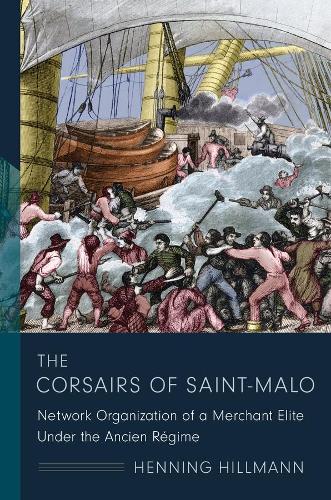
Книга The Corsairs of Saint-Malo: Network Organization of a Merchant Elite Under the Ancien Régime
Western Europe rose in global power during the early modern period as overseas expansion opened new trade routes. At the same time, intense rivalries pitted European states against one another in recurrent wars. Henning Hillmann examines the merchant community of Saint-Malo, Brittany, a key port in the French Atlantic economy, to shed light on the local networks that linked commerce and conflict in early modern Europe.
Hillmann traces the development of Saint-Malo and the social structure of its merchant elite from the 1680s through the onset of the French Revolution. He pinpoints the role of privateering, showing how it enabled local merchant communities to secure their hold on established trades, seize new opportunities, and withstand the threats of armed conflict. In wartime, rulers commissioned ship-owning traders to fit out vessels as corsairs to raid enemy shipping. Within a mercantilist worldview, this state-sanctioned private war at sea aligned the interests of local elites and the royal government. Locally, within Saint-Malo, the partnerships that merchant elites formed in their privateering ventures gave rise to a cohesive network that held their community together amid outside conflicts. Combining rich descriptions of privateering campaigns with quantitative network analysis of partnership ties over more than a century, The Corsairs of Saint-Malo offers a new understanding of the local organizational foundations of early modern capitalist development.
"This book was a pleasure to read. It tells the fascinting story of French privateers (corsaires, in French) who were legaly sanctioned by the French government during wartime." - Economic Growth in History
"I can definitely recommend adding it to your reading list. Hillman offers a captivating sociological take on over 100 years of conflict, trade, and personal fortune with this enjoyable study." - East India Blogging Co.
"Breaks new ground as an organizational and network analysis with broad implications for the evolution and cohesion of economic activity during mercantile capitalism." - Social Forces
"Hillmann’s contribution is an important one: he highlights the diversity of the merchant class, and describes a possible way in which a specialized local type of trade could help structure a local merchant community. Beyond its study of the course and of Saint-Malo, the book raises a host of questions regarding early modern economies, and thus should be widely read and discussed." - Economic History Review
"Hillmann provides an exceptionally well researched examination and perhaps an example of how to model future research on privateering partnerships throughout the seventeenth and eighteenth centuries." - Mariners Mirror
"The book raises a host of questions regarding early modern economies, and thus should be widely read and discussed." - The Economic History Review
"Offers a great deal to scholars of business economics as well as to historians looking for novel ways to understand the motivations behind commercial interactions. Through his network diagrams Hillmann presents a complex view of “the social fabric that held together the merchant community” and sheds new light on the links between maritime economy, war, and risk." - H-War