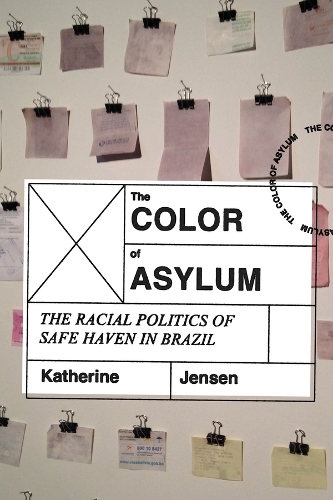
Книга The Color of Asylum: The Racial Politics of Safe Haven in Brazil
An ethnography of the difficult experiences of refugees in Brazil.
In 2013, as Syrians desperate to escape a brutal war fled the country, Brazil took the remarkable step of instituting an open-door policy for all Syrian refugees. Why did Brazil—in contrast to much of the international community—offer asylum to any Syrian who would come? And how do Syrians differ from other refugee populations seeking status in Brazil?
In The Color of Asylum, Katherine Jensen offers an ethnographic look at the process of asylum seeking in Brazil, uncovering the different ways asylum seekers are treated and the racial logic behind their treatment. She focuses on two of the largest and most successful groups of asylum seekers: Syrian and Congolese refugees. While the groups obtain asylum status in Brazil at roughly equivalent rates, their journey to that status could not be more different, with Congolese refugees enduring significantly greater difficulties at each stage, from arrival through to their treatment by Brazilian officials. As Jensen shows, Syrians, meanwhile, receive better treatment because the Brazilian state recognizes them as white, in a nation that has historically privileged white immigration. Ultimately, however, Jensen reaches an unexpected conclusion: Regardless of their country of origin, even migrants who do secure asylum status find their lives remain extremely difficult, marked by struggle and discrimination.
"The Color of Asylum provokes important questions about racialized political violence and the ways in which seemingly inclusive regimes and policies can continue to produce racial domination. This book would greatly benefit those studying, among other topics, the racialization of migrants, the social and political construction of the refugee condition, the state’s role in processes of migrant in/exclusion, the intersection of racial subordination and legal status, and the numerous ways that racism shapes migrant sociopolitical belonging. It would also be a strong entry point for those looking to teach or learn about race and migration beyond Europe or the United States." - Sociology of Race and Ethnicity