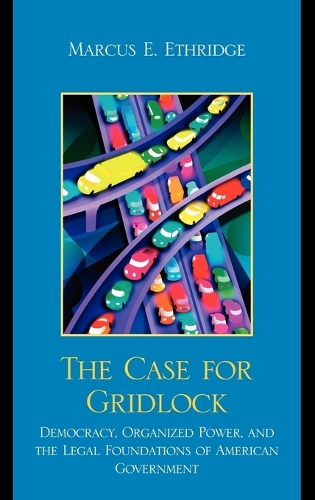
Книга The Case for Gridlock: Democracy, Organized Power, and the Legal Foundations of American Government
The Case for Gridlock explains how Progressive ideas about government have led to severe representational problems in the American political system. Having rejected the Framers' institutional arrangement as sluggish and frustrating, Progressives have, for over a century, worked to circumvent the Madisonian system by establishing policy-making power in executive agencies and commissions. Ironically, the most consequential legacy of Progressivism is an institutional system that became more perfectly and efficiently responsive to the inherently unbalanced organized political power that they lament. Drawing on an analysis of administrative law and decades of research on interest groups, The Case for Gridlock explores the faulty logic and naïve thinking of the Progressive perspective, revealing the uncertainties and anomalies in legal doctrine that have emerged as a result of their effort to graft "efficient" designs onto the gridlock-prone system that James Madison and the other Framers left us. The problems of "interest group liberalism" and the accumulation of powerful interests that undermine economic growth and political stability have long been recognized by political scientists and economists. The Case for Gridlock argues that these problems are not inevitable and that a solution exists in reasserting the Constitutional Principle as the foundation for the design and operation of U.S. governmental institutions. The public's interests can prevail over those of organized special interests by returning power to the gridlock-prone institutional arrangement established in the Constitution.
"In the interest of limiting the power of government, James Madison and the framers of the US Constitution created a system of political institutions notoriously resistant to policy change; it tends toward gridlock. Reformers chafe at the many 'veto points' available to organized interests to stifle policy change. This important, well-researched, provocative book demonstrates how progressive reformers sought to shift the power to shape policy from the legislative branch to the executive bureaucracy. Ethridge (Univ. of Wisconsin) argues that reformers viewed this as a strategy for limiting the power of 'special interests' to stymie policy change; beyond the reach of interest groups, technocrats in the bureaucracy would promote policy changes consistent withthe reformers goals. What the reformers failed to appreciate was, first, the ability of interest groups to infiltrate the bureaucracy and promote their interests, often in ways diametrically opposed to the reformers' intentions, and, second, the capacityof Congress to overcome the influence of groups and generate policy change. He argues that a return to the 'constitutional principle' of gridlock, in which special interests must compete in a legislative forum, presents the best means of promoting the p" - CHOICE, November 2010
"Ethridge offers a good analysis of an overlooked topic…and its importance for public policy…. Persuasively challenge what most people believe about politics….deserves readers concerned about the origins and consequences of regulation in the United States." - Regulation, Fall 2010
"In the interest of limiting the power of government, James Madison and the framers of the US Constitution created a system of political institutions notoriously resistant to policy change; it tends toward gridlock. Reformers chafe at the many 'veto points' available to organized interests to stifle policy change. This important, well-researched, provocative book demonstrates how progressive reformers sought to shift the power to shape policy from the legislative branch to the executive bureaucracy. Ethridge (Univ. of Wisconsin) argues that reformers viewed this as a strategy for limiting the power of 'special interests' to stymie policy change; beyond the reach of interest groups, technocrats in the bureaucracy would promote policy changes consistent with the reformers goals. What the reformers failed to appreciate was, first, the ability of interest groups to infiltrate the bureaucracy and promote their interests, often in ways diametrically opposed to the reformers' intentions, and, second, the capacity of Congress to overcome the influence of groups and generate policy change. He argues that a return to the 'constitutional principle' of gridlock, in which special interests must compete in a legislative forum, presents the best means of promoting the public interest. Recommended." - CHOICE, November 2010