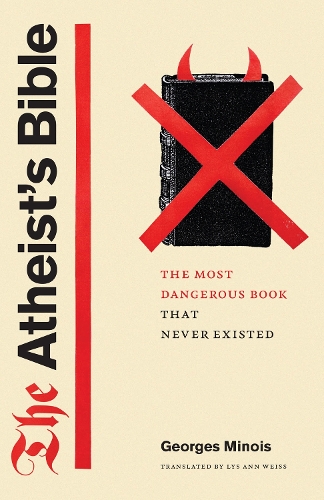
A comprehensive biography of the Treatise of the Three Impostors, a controversial nonexistent medieval book.
Like a lot of good stories, this one begins with a rumor: in 1239, Pope Gregory IX accused Frederick II, the Holy Roman Emperor, of heresy. Without disclosing evidence of any kind, Gregory announced that Frederick had written a supremely blasphemous book—
De tribus impostoribus, or the
Treatise of the Three Impostors—in which Frederick denounced Moses, Jesus, and Muhammad as impostors. Of course, Frederick denied the charge, and over the following centuries the story played out across Europe, with libertines, freethinkers, and other “strong minds” seeking a copy of the scandalous text. The fascination persisted until finally, in the eighteenth century, someone brought the purported work into actual existence—in not one but two versions, Latin and French. Although historians have debated the origins and influences of this nonexistent book, there has not been a comprehensive biography of the
Treatise of the Three Impostors. In
The Atheist’s Bible, the eminent historian Georges Minois tracks the course of the book from its origins in 1239 to its most salient episodes in the seventeenth and eighteenth centuries, introducing readers to the colorful individuals obsessed with possessing the legendary work—and the equally obsessive passion of those who wanted to punish people who sought it. Minois’s compelling account sheds much-needed light on the power of atheism, the threat of blasphemy, and the persistence of free thought during a time when the outspoken risked being burned at the stake.
"“I can’t speak enthusiastically enough for Minois’s excellent book. The Atheists’s Bible is more scholarly than Stephen Greenblatt’s The Swerve and less playful than the philological detective work that Robert K. Merton displayed in On the Shoulders of Giants, but it offers comparable intellectual pleasure. Lys Ann Weiss’s translation, moreover, reads beautifully.”" - Bookforum
"“Just as in Umberto Eco’s novel The Prague Cemetery, if you create false evidence in order to discredit your enemies—be they Jews or Jesuits, Carbonari or Bolsheviks, Masons or the Vatican—you will soon find people eager not only to believe you but also to serve the cause you have been trying to undermine. The text that is the object of Georges Minois’ study, the Treatise of the Three Impostors, provides a perfect illustration of this peculiar dynamics of deceit, credulity and paranoia."" - Times Higher Education