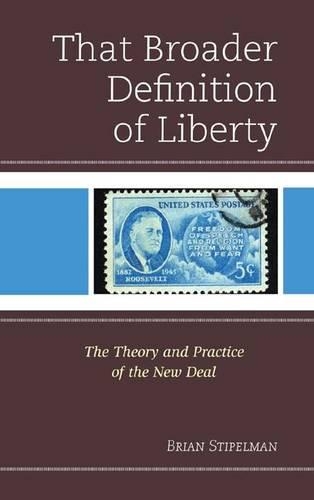
Книга That Broader Definition of Liberty: The Theory and Practice of the New Deal
That Broader Definition of Liberty synthesizes a political theory of the New Deal from the writings of Franklin Roosevelt, Eleanor Roosevelt, Henry Wallace, and Thurman Arnold. The resultant theory highlights the need for the public accountability of private economic power, arguing that when the private economic realm is unable to adequately guarantee the rights of citizens, the state must intervene to protect those rights. The New Deal created a new American social contract that accorded our right to the pursuit of happiness a status equal to liberty, and grounded both in an expansive idea of security as the necessary precondition for the exercise of either. This was connected to a theory of the common good that privileged the consumer as the central category while simultaneously working to limit the worst excesses of consumption-oriented individualism. This theory of ends was supplemented by a theory of practice that focused on ways to institutionalize progressive politics in a conservative institutional context. Brian Stipelman, drawing upon a mixture of history, American political development, and political theory, offers a comprehensive theory of the New Deal, covering both the ends it hoped to achieve and the means it used to achieve them.
"Historians and political scientists largely have viewed the New Deal as an almost purely political project. While a few historians and scholars of American political development have outlined a political theory of the New Deal, Stipelman (Dowling College) offers what is likely the first book-length study that takes seriously the ideas of New Deal Democrats. The author focuses on four key figures: Franklin Delano Roosevelt; his wife, Eleanor; his key aide (and eventual vice president), Henry A. Wallace; and the legal scholar and practitioner Thurman Arnold. Going beyond these thinkers' ideas about state intervention and institution building, Stipelman articulates the key assumptions about economics, liberty and happiness, and class structure that underlie their political thought. Some scholars may disagree with the author's emphasis on particular aspects of New Deal theory, such as the choice of consumerism as the basis of happiness and security. But even critical readers will appreciate this fine volume for its role in starting the conversation. Summing Up: Highly recommended." - CHOICE