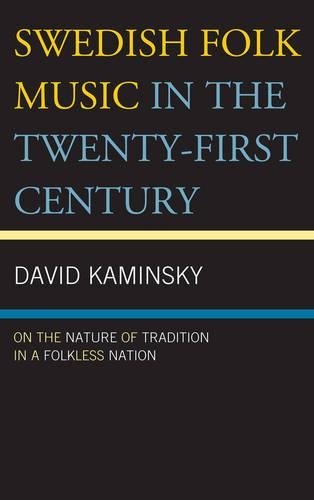
Книга Swedish Folk Music in the Twenty-First Century: On the Nature of Tradition in a Folkless Nation
In applying the term "folk music" to the music they were collecting, early nineteenth-century Swedish folklorists saturated it with the cultural currency of romantic nationalism. These collectors promoted the music as the essence of the rural peasant folk, and thus of the nation; the tradition it represented was ancient, invested with the power of nature itself. Since that time, "folk music" has retained its symbolic value, while at the same time the national romantic narrative has broken down due to its being politically problematic as well as factually unsustainable. Research that has been done on rural peasant music in the intervening years reveals that it was never particularly ancient nor nationally uniform, nor truly distinguishable from "popular" or "art" musics. Swedish Folk Music in the Twenty-First Century: On the Nature of Tradition in a Folkless Nation, by David Kaminsky, examines the struggle of present-day Swedish folk musicians and dancers to maintain the cultural currency of their genre while simultaneously challenging the historical fallacies and ideological agenda upon which that currency was originally based. The notion of Swedish cultural purity once championed by nineteenth-century folklorists has been dismissed by serious scholars and now marks the discourse of the anti-immigrant extreme right, alienating it from the academic-savvy center/left-leaning folk music subculture of today. Kaminsky's study is especially relevant today, given the rise of the anti-immigrant extreme right in Sweden, and their efforts to preserve culturally "pure" Swedish folk music at the expense of existing multicultural government initiatives.
"This slender volume is a probing, elegantly written assessment of a more tightly circumscribed topic than the author advertises with the book’s title. . . .Kaminsky, a fine flutist and respected performer of Swedish folk melodies, is well equipped to discuss music as sound and practice." - Journal of American Folklore
"This slender volume is a probing, elegantly written assessment of a more tightly circumscribed topic than the author advertises with the book’s title. . . .Kaminsky, a fine flutist and respected performer of Swedish folk melodies, is well equipped to discuss music as sound and practice." - Journal of American Folklore
"Kaminsky’s book is a valuable work, not least because it both clarifies and problematises many current issues . . . He has managed to both capture the many nuances and to present the study in a manageable structure, where some basic questions continually generate new approaches and expressions. . . .Swedish Folk Music in the Twenty-first Century could serve as a model for ethnomusicological studies in other fields and genres. Kaminsky’s analysis of the concept of folk music and of practical music-making, combined with an historical overview, bring new and important insights into the understanding of Swedish folk music." - Ethnomusicology Forum