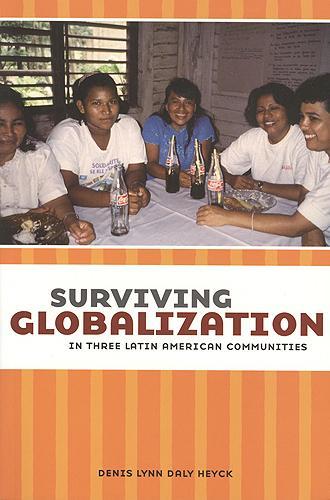
Surviving Globalization offers valuable insights into the impact of global economic policies on rural communities in Nicaragua and Brazil and among the Guarani of Bolivia through the personal testimonies of local activists. Their narratives show grass-roots democracy at work as these men and women recount their struggles to improve literacy and health, to run cooperatives and protect the environment. Denis Heyck's admirably detailed introductions to each of these communities do not scant the complexity of their relations to local, national, and international forces. -- Jean Franco, Columbia University
Globalization has reached even the most remote areas of Latin America, pushing traditional peoples and habitats to the brink of extinction and offering a stark choice: adapt or perish. Local communities are scrambling to adjust to new market and social realities while trying to hold on to those cultural values that they regard as non-negotiable.
This book tells the important story of three Latin American communities experiencing globalization at the point of contact between tradition and modernity: Brazil's rubber tappers, Bolivia's Guaraní Indians, and Nicaragua's women cooperativists. Through exclusive, in-depth interviews, Heyck describes globalization and development in the words of people who are experiencing these forces at the grassroots level. The result is a multifaceted understanding of local and global connections and of the human, cultural, and religious dimensions of globalization.