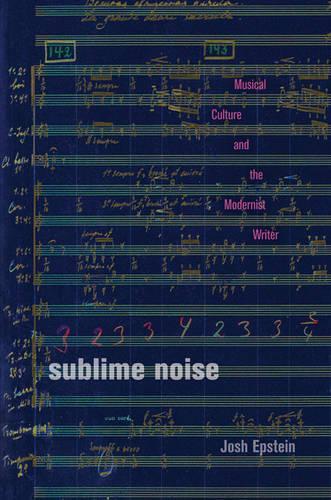
Книга Sublime Noise: Musical Culture and the Modernist Writer
Josh Epstein's Sublime Noise is an original, intellectually capacious, and frequently brilliant analysis of the theoretical and material relationships between writers of the modernist period in America, Ireland, and England, and the music of their cultures-both received 'classics' of the nineteenth century and the experimental 'new music' of their times. Each superb chapter articulates a complex argument that reinvigorates many of the most canonical texts of modernism. -- Scott W. Klein, Wake Forest University Epstein's erudite book, written with panache, will provide intellectual joy to any reader interested in diffraction patterns between music and culture in the twentieth century. Its arresting thesis reverses Pater's famous dictum: all art aspires to the condition of noise. But the signal-to-noise ratio of Epstein's own writing is remarkably high. -- Daniel Albright, Ernest Bernbaum Professor of Literature, Harvard University
When Stravinsky's Rite of Spring premiered in Paris in 1913, the crowd rioted in response to the harsh dissonance and jarring rhythms of its score. This was noise, not music. In Sublime Noise, Josh Epstein examines the significance of noise in modernist music and literature. How - and why - did composers and writers incorporate the noises of modern industry, warfare, and big-city life into their work? Epstein argues that, as the creative class engaged with the racket of cityscapes and new media, they reconsidered not just the aesthetic of music but also its cultural effects. Noise, after all, is more than a sonic category: it is a cultural value judgment - a way of abating and categorizing the sounds of a social space or of new music. Pulled into dialogue with modern music's innovative rhythms, noise signaled the breakdown of art's autonomy from social life-even the "old favorites" of Beethoven and Wagner took on new cultural meanings when circulated in noisy modern contexts. The use of noise also opened up the closed space of art to the pressures of publicity and technological mediation. Building both on literary cultural studies and work in the "new musicology," Sublime Noise examines the rich material relationship that exists between music and literature. Through close readings of modernist authors, including James Joyce, T. S. Eliot, Edith Sitwell, E. M. Forster, and Ezra Pound, and composers, including George Antheil, William Walton, Erik Satie, and Benjamin Britten, Epstein offers a radically contemporary account of musical-literary interactions that goes well beyond pure formalism. This book will be of interest to scholars of Anglophone literary modernism and to musicologists interested in how music was given new literary and cultural meaning during that complex interdisciplinary period.