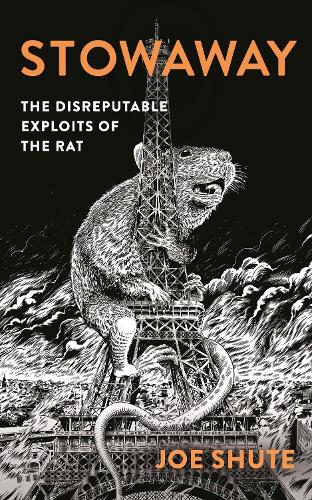
A cultural and social history of the rat, examining how one creature achieved total world domination and has inspired such love and loathing.
‘Shows us that, ultimately, the history of rats is a history of ourselves.’ THE SUNDAY TIMES
‘An intelligent and enlightening book’ MICHAEL MORPURGO
'Wonderful' THE SPECTATOR
Plague-carriers. Filth-spreaders. Villains. Vermin. No animal is more maligned than the rat – or more misunderstood.
Rats inspire fear and fascination in equal measure – everyone has a rat story. In Stowaway, Joe Shute travels to some of the most heavily infested cities in the world to unpick the myths we tell ourselves about our rodent neighbours.
From sub-Saharan Africa to the Rocky Mountains, he delves into the hidden world rats inhabit beneath our feet, learns about their role in natural ecosystems and discovers how their extraordinary intelligence is saving lives. And through his own pet rats, he overcomes his own prejudices and experiences the deep emotional bonds rats can form with humans when given the chance.
Rats have shaped human history – and with so many of them living alongside us, there’s no future without them. Is there a better way to coexist with them in the modern age? And what can the lives of rats teach us about our own?
"Stowaway is not another natural history in the vein of the otter or the barn owl … Shute’s real aim is to show us that, ultimately, the history of rats is a history of ourselves." - The Sunday Times
"This wonderful, charming book … forcefully demonstrates how little we know about our rodent neighbours." - The Spectator
"An intelligent and enlightening book … Read this book and you will never look at a rat the same way again. They are complex like us, intelligent like us. Read this book and you’ll shudder no more when you see a rat. That’s what I’m telling myself anyway." - Michael Morpurgo
"Rats are far from the dirty vermin that we all love to deride; indeed, they are acutely intelligent and thoroughly fascinating. Joe Shute eloquently puts us right about the world's most common rodent and throws in some great facts and theories too." - David Lindo