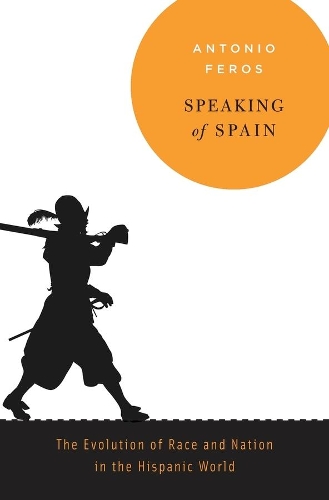
Книга Speaking of Spain: The Evolution of Race and Nation in the Hispanic World
Momentous changes swept Spain in the fifteenth century. A royal marriage united Castile and Aragon, its two largest kingdoms. The last Muslim emirate on the Iberian Peninsula fell to Spanish Catholic armies. And conquests in the Americas were turning Spain into a great empire. Yet few in this period of flourishing Spanish power could define “Spain” concretely, or say with any confidence who were Spaniards and who were not. Speaking of Spain offers an analysis of the cultural and political forces that transformed Spain’s diverse peoples and polities into a unified nation.
Antonio Feros traces evolving ideas of Spanish nationhood and Spanishness in the discourses of educated elites, who debated whether the union of Spain’s kingdoms created a single fatherland (patria) or whether Spain remained a dynastic monarchy comprised of separate nations. If a unified Spain was emerging, was it a pluralistic nation, or did “Spain” represent the imposition of the dominant Castilian culture over the rest? The presence of large communities of individuals with Muslim and Jewish ancestors and the colonization of the New World brought issues of race to the fore as well. A nascent civic concept of Spanish identity clashed with a racialist understanding that Spaniards were necessarily of pure blood and “white,” unlike converted Jews and Muslims, Amerindians, and Africans.
Gradually Spaniards settled the most intractable of these disputes. By the time the liberal Constitution of Cádiz (1812) was ratified, consensus held that almost all people born in Spain’s territories, whatever their ethnicity, were Spanish.
"Drawing on dozens of legal, political, and/or philosophical treatises, mostly from the 16th and 17th centuries, as well as a treasure trove of current secondary sources, Feros demonstrates that the creation of Spain—indeed, the very concept of being Spanish—emerged out of debates by elite intellectuals played out over 300 years prior to the 1812 Cádiz Constitution, which publicly affirmed that all people born in Spanish-controlled territories were Spaniards, regardless of their place of birth or the color of their skin. Given the presence of others within Spain such as Jews, Muslims, and conversos, as well as others without—Indians, blacks, slaves, and, later, Creole elites in the Spanish empire—Feros convincingly argues that these discussions also included evolving discourses on race that escalated in the 18th century when scientific racism discussions in other European nations folded into Spanish ruminations on race. Valuable for its elegant writing, painstakingly thorough research, and Feros’s ability to convey very complicated arguments in his primary sources in clear, accessible English, this intellectual history is a seminal work." - Choice