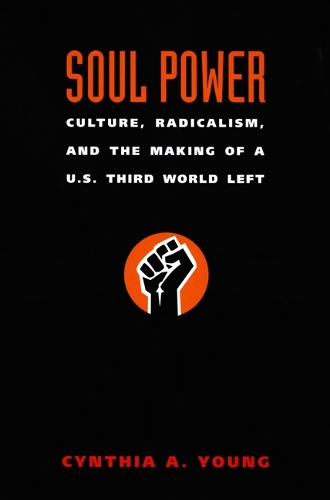
Книга Soul Power: Culture, Radicalism, and the Making of a U.S. Third World Left
A cultural history of U.S. activists and organizers of color who appropriated theories and strategies from Third World anticolonial struggles in their own fight for social justice.
Soul Power is a cultural history of those whom Cynthia A. Young calls “U.S. Third World Leftists,” activists of color who appropriated theories and strategies from Third World anticolonial struggles in their fight for social and economic justice in the United States during the “long 1960s.” Nearly thirty countries in Africa, Asia, and Latin America declared formal independence in the 1960s alone. Arguing that the significance of this wave of decolonization to U.S. activists has been vastly underestimated, Young describes how literature, films, ideologies, and political movements that originated in the Third World were absorbed by U.S. activists of color. She shows how these transnational influences were then used to forge alliances, create new vocabularies and aesthetic forms, and describe race, class, and gender oppression in the United States in compelling terms.
Young analyzes a range of U.S. figures and organizations, examining how each deployed Third World discourse toward various cultural and political ends. She considers a trip that LeRoi Jones, Harold Cruse, and Robert F. Williams made to Cuba in 1960; traces key intellectual influences on Angela Y. Davis’s writing; and reveals the early history of the hospital workers’ 1199 union as a model of U.S. Third World activism. She investigates Newsreel, a late 1960s activist documentary film movement, and its successor, Third World Newsreel, which produced a seminal 1972 film on the Attica prison rebellion. She also considers the L.A. Rebellion, a group of African and African American artists who made films about conditions in the Watts neighborhood of Los Angeles. By demonstrating the breadth, vitality, and legacy of the work of U.S. Third World Leftists, Soul Power firmly establishes their crucial place in the history of twentieth-century American struggles for social change.
"“Soul Power is a significant contribution to the study of US radicalism, highlighting the roles African Americans and other people of color played in these movements. Considering the ambitious range of her project, Young delivers an admirable mix of breadth and depth, covering a number of individuals and organizations and their relevance to the development of the US Third World Left. The carefully chronicled historiography provides a valuable foundation for further investigations of this period.”" - MELUS
"“[T]he great virtue of Soul Power is to complicate our understandings of 1960s-era social movements. Soul Power successfully challenges New Left narratives that place the activities of white middleclass youths at their center, and civil rights narratives that concentrate on the struggle against racial oppression while ignoring that against class oppression. By focusing on a series of important, fascinating, and neglected historical actors, Young offers us a much richer understanding of the 1960s-era left.”" - Journal of American Studies