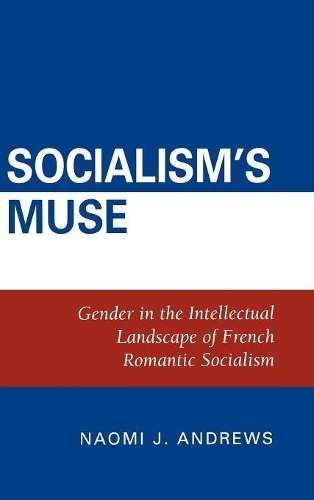
Socialism's Muse addresses the problematic and longstanding relationship between socialism and feminism from the perspective of the origins of both movements in early nineteenth century France. Focusing on the works of a number of socialist writers of the 1830s and 1840s, the book explores the role of gendered imagery in the articulation of the ideal social community, the nature of the individual, and the ties that bind the two together. Naomi J. Andrews argues that the way romantic socialists conceptualized the human community - in gendered terms, specifically - determined both the emergence and limitation of what is retrospectively termed "feminism." Providing an illuminating analysis of the intellectual underpinnings of women's exclusion from socialism in its earliest organized manifestation, Socialism's Muse is valuable reading for scholars of women's studies, French history, and intellectual history alike.
"...Andrews effectively demonstrates just how central the philosophical question of the nature and limits of individualism was to early socialist discourse. Her deft analyses of gendered fantasies on social cohesion provide a useful roadmap through the often tortuous labyrinths of romantic socialist thought..." - H-Net: Humanities and Social Science Reviews Online, Michael C. Behrent, February 2008