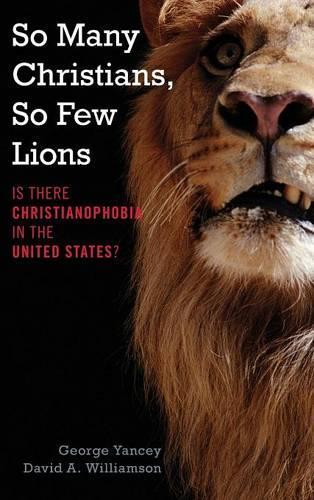
Книга So Many Christians, So Few Lions: Is There Christianophobia in the United States?
So Many Christians, So Few Lions is a provocative look at anti-Christian sentiments in America. Drawing on both quantitative and qualitative research, authors George Yancey and David A. Williamson show that even though (or perhaps because) Christianity is the dominant religion in the United States, bias against Christians also exists—particularly against conservative Christians—and that this bias is worth understanding. The book does not attempt to show the prevalence of anti-Christian sentiments—called Christianophobia—but rather to document it, to dig into where and how it exists, to explore who harbors these attitudes, and to examine how this bias plays itself out in everyday life. Excerpts from the authors’ interviews highlight the fear and hatred that some people harbor towards Christians, especially the Christian right, and the ways these people exhibit elements of bigotry, prejudice, and dehumanization. The authors argue that understanding anti-Christian bias is important for understanding some social dynamics in America, and they offer practical suggestions to help reduce religious intolerance of all kinds.
"Yancey and Williamson explore anti-Christian attitudes in US society. Though they nod to historical precedent in the intellectual history of the 18th and 19th centuries, the authors focus primarily on current trends. They find that those who hold anti-Christian sentiments tend to have higher social status and to be better educated, more politically progressive, and less religious than other Americans. Moreover, the negative sentiment is directed not so much at Christianity in general as toward Christianity in its conservative/fundamentalist expressions. The authors conclude that progressives’ hostility derives from fear that conservatives seek to achieve political control to impose anti-gay, anti-abortion, anti-pluralist views on society and thereby restrict individual liberties and choices. Progressives currently exercise a great deal of influence in American life. They cherish rationality, individual liberty, and toleration of others and resent intolerant Christians who seek to undermine their values and impose one exclusive view on all citizens. This aspect of the culture wars has long been recognized. The authors acknowledge limitations of their sources and admit a level of speculation. The value of this study is that it begins to document and analyze the presence of current anti-fundamentalist sentiments in the US. Summing Up: Recommended. With reservations. All readers." - CHOICE
"[T]he analytical manner in which the authors reported this hostility gave me the emotional freedom to pause and think more objectively about the animosity I’ve experienced. It let me put that animosity at arm’s length for a while. It gave me a chance to consider how I should respond. . . .This book helped me slow down, reflect, remember, and possibly be more prepared for the next time I’m tested. I want to be treated as human. Therefore I’m committed to treating even antagonists and dehumanizers as human." - Breakpoint Commentary