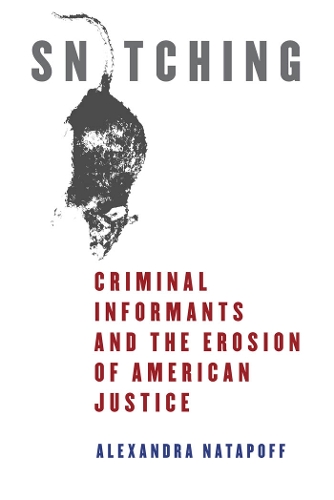
Книга Snitching: Criminal Informants and the Erosion of American Justice
An eye-opening look at the impact of the use of the criminal informant throughout the American legal system and beyond from the mafia and hip hop music to white collar crime and terrorism
2010 Honorable Mention, Silver Gavel Award, American Bar Association
Uncovers the powerful and problematic practice of snitching to reveal disturbing truths about how American justice works
Albert Burrell spent thirteen years on death row for a murder he did not commit. Atlanta police killed 92-year-old Kathryn Johnston during a misguided raid on her home. After being released by Chicago prosecutors, Darryl Moore—drug dealer, hit man, and rapist—returned home to rape an eleven-year-old girl.
Such tragedies are consequences of snitching—police and prosecutors offering deals to criminal offenders in exchange for information. Although it is nearly invisible to the public, criminal snitching has invaded the American legal system in risky and sometimes shocking ways. Snitching is the first comprehensive analysis of this powerful and problematic practice, in which informant deals generate unreliable evidence, allow criminals to escape punishment, endanger the innocent, compromise the integrity of police work, and exacerbate tension between police and poor urban residents. Driven by dozens of real-life stories and debacles, the book exposes the social destruction that snitching can cause in high-crime African American neighborhoods, and how using criminal informants renders our entire penal process more secretive and less fair. Natapoff also uncovers the far-reaching legal, political, and cultural significance of snitching: from the war on drugs to hip hop music, from the FBI’s mishandling of its murderous mafia informants to the new surge in white collar and terrorism informing. She explains how existing law functions and proposes new reforms. By delving into the secretive world of criminal informants, Snitching reveals deep and often disturbing truths about the way American justice really works.
"Natapoff does a good job of explaining the law that governs the use of informants, and of describing how the all-too-rare regulatory schemes, such as FBI guidelines, work. One would expect this much from any law professor; Natapoff, however, goes much further. One of the truly impressive contributions of the book comes in her explanation of the effects of widespread use of informants for the criminal justice system, our social structures, and our democracy... If it simply described [the] dramatic downsides in order to properly tally both benefits and risks of informant use, Snitching would be a very successful book. But to her credit, Natapoff does more than just catalogue these problems. She gives us a comprehensive picture of what we must do to make the use of informants acceptable within our criminal justice system... Alexandra Natapoff had produced a useful, timely, and important book. Snitching should find a place in every law school course looking at legal issues in the criminal justice arena, and on the syllabi of every university course in criminal justice that aims to give students a realistic and nuanced view of how the system really works. Natapoffs observations, as fair as they are, may not sit well with those committed to getting the bad guys at any cost. But that is the books real gift: showing us what that cost is, and suggesting ways of constructing a system of criminal justice that accurately mirrors the values to which we aspire." - Criminal Justice
"If there is one form of communication that criminals universally condemn, it is snitching. Yet the use of criminal informants is everywhere in the American legal system, says Alexandra Natapoff." - The Chronicle Review
"The book...provides a sweeping look at law-enforcement use of confidential informants." - Los Angeles Daily Journal
"[T]hought-provoking. Natapoffoffers the most up-to-date and trenchant analysis of & snitching in the criminal justice system [and]insightful proposals for reform. Th[is] impressive text make[s] important substantive and theoretical contributions to the scholarship on race, class, crime, and the legal system." - Du Bois Review
"This is a useful book that can be read with profit by practitioners, scholars, and the general public." - Choice
"Alexandra Natapoff has written analytically and creatively about informants and their handlers." - California Lawyer
"Its truly an eye-opening book and a fascinating look at how much police work depends on a system no one wants to talk about, as ironic as that may be. I cant imagine anyone devoted to police procedurals wouldnt find it engrossing." - Barnes and Noble