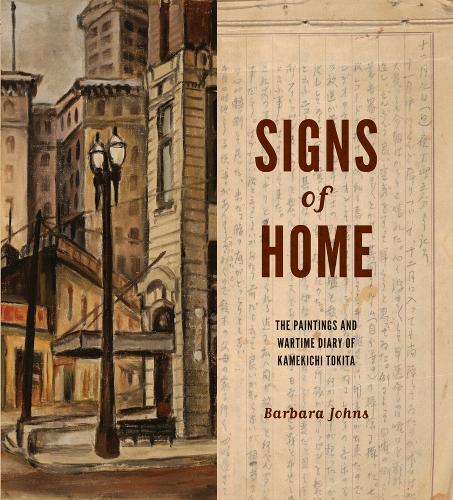
Книга Signs of Home: The Paintings and Wartime Diary of Kamekichi Tokita
A deeply moving account of life before, during, and after the Japanese internment as witnessed by a great Seattle artist
Issei artist Kamekichi Tokita emigrated from Japan in the early twentieth century and settled in Seattle’s Japanese American immigrant community. By the 1930s he was established as a prominent member of the Northwest art scene and allied with the region’s progressive artists. On the day Pearl Harbor was bombed Tokita started a diary that he vowed to keep until the war ended. In it he recorded with expressiveness and insight the events, fears, rumors, and restrictions—and his own emotional turmoil—before and during his detention at Minidoka.
This beautiful and poignant biography of Tokita uses his paintings and wartime diary to vividly illustrate the experiences, uncertainties, joys, and anxieties of Japanese Americans during the World War II internment and the more optimistic times that preceded it. It contextualizes Tokita’s paintings and diary within the art community and Japanese America and introduces readers to an amazing man who embraced life despite living through challenging and disheartening times.
This beautiful and poignant biography of Issei artist Kamekichi Tokita uses his paintings and wartime diary to vividly illustrate the experiences, uncertainties, joys, and anxieties of Japanese Americans during the World War II internment and the more optimistic times that preceded it. Tokita emigrated from Japan in the early twentieth century and settled in Seattle’s Japanese American immigrant community. By the 1930s, he was established as a prominent member of the Northwest art scene and allied with the region's progressive artists. His art shares qualities of American Realism while it embodies a ditinctively Issei perspective on his new home.
On the day Pearl Harbor was bombed, Tokita started a diary that he vowed to keep until the war ended. In it he recorded with great vividness and insight the events, fears, rumors, restrictions, and his own emotional turmoil before and during his detention at Minidoka. The diary in this book is a rare personal account of this time written as events were unfolding and by a person of maturity and stature.
This book contextualizes Tokita’s paintings and diary within the art community and Japanese America. It also introduces us to an amazing man who embraced life despite living through challenging and disheartening times.
"
"The wartime diary of Tokita is . . . a fascinating primary document, filled with uncertainties and ambivalence that make some of the received wisdom about the internment camps feel a little too pat. Even though the reader knows, in general terms, how the story came out, the suspense in this eyewitness account is considerable."
" - Seattle Times"
"Examines Tokita’s art in the context of his life and the historic events that he lived through, integrating it all into a deeply moving human story."
" - International Examiner"
"Barbara Johns examines Tokita's art in the context of his life and the historic events that he lived through, integrating it all into a deeply moving human story."
" - International Examiner"
"To see history unfold through Tokita's words and images is to gain a whole new perspective on that conflict [Japanese internment during World War II] and the nature of all immigrants to America who suddenly find themselves identified as the enemy."
" - Bigthink.com"
"A fascinating book that accomplishes more than one purpose. The first part is a biography of Tokita . . . the second is Tokita's diary from 1941-44. . . . Signs of Home includes plenty of examples that prove his status as an important regional artist."
" - The Oregonian"
". . . one of the more beautiful and soulful books you might lay your hands on . . ."
" - City Living"
"If 'painting Seattle' feels like the welcome restoration of a long-lost chapter in local art history, the wartime diary is a thornier business . . . filled with uncertainties and ambivalence that make some of the received wisdom about the internment camps feel a little too pat."
" - The Seattle Times