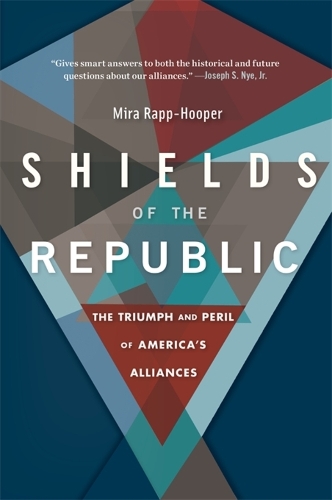
Книга Shields of the Republic: The Triumph and Peril of America’s Alliances
“Rapp-Hooper takes on directly and convincingly the Trumpian critique that alliances are not worth the investment and have led the nation to fight other people’s battles for them…Her deep erudition, crisp prose style, and innate brilliance shine through on most every page.”
—Boston Review
“The threat of COVID-19 has bolstered her argument, making plain both the importance of the alliance system and the imperative to adapt alliances to new ends.”
—Foreign Policy
“Musters rock-solid evidence to demonstrate what policymakers have long believed: that America’s alliances are a remarkably effective foreign policy tool.”
—Stephen Hadley, former National Security Advisor
“Argues persuasively that the complex alliance system instituted after the devastation of World War II has proven remarkably successful.”
—Kirkus Reviews
For the first 150 years of its existence, heeding George Washington’s warning about the dangers of “entangling alliances,” the United States had just one alliance—a valuable but highly controversial military arrangement with France. That changed dramatically with the Second World War. Between 1948 and 1955, the United States extended defensive security guarantees to twenty-three countries in Europe and Asia. Seventy years later, it is allied with thirty-seven countries.
Today the alliance system is threatened from without and within. China and Russia seek to break America’s alliances through conflict and non-military erosion, while US politicians and voters, skeptical of costs, believe we may be better off without them. But what if the alliance system is a victim of its own quiet success? Mira Rapp-Hooper argues that a grand strategy focused on allied defense, deterrence, and assurance helped to keep the peace throughout the Cold War and that the alliance system remains critical to America’s safety and prosperity in the twenty-first century.
"A learned rationale and blueprint for that reinvigoration of alliances. Rapp-Hooper takes on directly and convincingly the Trumpian critique that alliances are not worth the investment and have led the nation to fight other people’s battles for them…Her deep erudition, crisp prose style, and innate brilliance shine through on most every page." - Boston Review
"Despite enduring support among the U.S. public for the alliance system, President Donald Trump seems determined to upend it, as Mira Rapp-Hooper observes in her astute new book defending U.S. alliances…The threat of COVID-19 has bolstered her argument, making plain both the importance of the alliance system and the imperative to adapt alliances to new ends." - Foreign Policy
"Rapp-Hooper argues persuasively that the complex alliance system instituted after the devastation of World War II has proven remarkably successful…With Donald Trump's active animosity toward our traditional allies, the author cautions about a glaring blind spot: rising nonmilitary coercion from China and Russia." - Kirkus Reviews
"[A] perceptive look at America’s alliance system since World War II…Rapp-Hooper aims to counter the ignorant America First narrative by proving the value of alliances to the United States itself…She shows that defensive pacts served their intended objectives. The alliances, most importantly, also put American security first. Not only did they provide an adequate bang for a well-invested buck, but without them, America’s safety would have been at grave risk." - E-International Relations