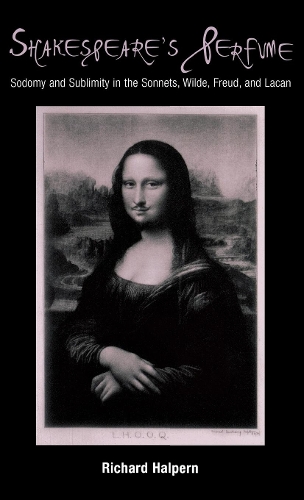
Drawing on theology, alchemy, psychoanalysis, philosophy, and literary criticism, Shakespeare's Perfume explores how the history of aesthetics and the history of sexuality are fundamentally connected.
Starting with St. Paul's argument that the Greeks were afflicted with homosexuality to punish their excessive love of statues, Richard Halpern uncovers a tradition in which aesthetic experience gives birth to the sexual—and thus reverses the Freudian thesis that erotic desire is sublimated into art. Rather, Halpern argues, sodomy was implicated with aesthetic categories from the very start, as he traces a connection between sodomy and the unrepresentable that runs from Shakespeare's Sonnets to Oscar Wilde's novella The Portrait of Mr. W.H., Freud's famous essay on Leonardo da Vinci, and Jacques Lacan's seminar on the ethics of psychoanalysis. Drawing on theology, alchemy, psychoanalysis, philosophy, and literary criticism, Shakespeare's Perfume explores how the history of aesthetics and the history of sexuality are fundamentally connected.
"A witty, provocative, and timely book . . . that takes much current discussion of gender, aesthetics, and sexuality one step further." - Sixteenth Century Journal
"This unique book will change and deepen the sense of what sexual desire has meant and means in the culture that we inhabit, and that inhabits us in turn." - Jeff Nunokawa, Princeton University
"This is a criticism of nearly Nietzschean wit. Halpern goes about his intellectual business with a combination of deep levity and sustaining seriousness." - Joseph Loewenstein, Washington University