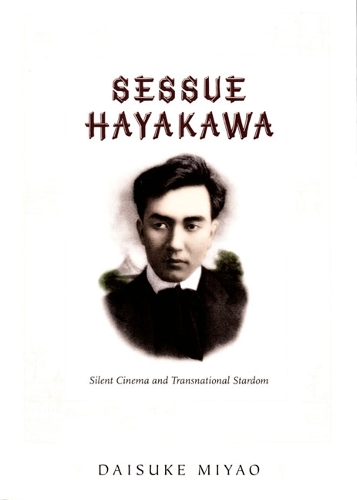
Книга Sessue Hayakawa: Silent Cinema and Transnational Stardom
Critical biography of Sessue Hayakawa, a Japanese actor who became a popular silent film star in the US, that looks at how Hollywood treated issues of race and nationality in the early twentieth century
While the actor Sessue Hayakawa (1886–1973) is perhaps best known today for his Oscar-nominated turn as a Japanese military officer in The Bridge on the River Kwai (1957), in the early twentieth century he was an internationally renowned silent film star, as recognizable as Charlie Chaplin or Douglas Fairbanks. In this critical study of Hayakawa’s stardom, Daisuke Miyao reconstructs the Japanese actor’s remarkable career, from the films that preceded his meteoric rise to fame as the star of Cecil B. DeMille’s The Cheat (1915) through his reign as a matinee idol and the subsequent decline and resurrection of his Hollywood fortunes.
Drawing on early-twentieth-century sources in both English and Japanese, including Japanese-language newspapers in the United States, Miyao illuminates the construction and reception of Hayakawa’s stardom as an ongoing process of cross-cultural negotiation. Hayakawa’s early work included short films about Japan that were popular with American audiences as well as spy films that played upon anxieties about Japanese nationalism. The Jesse L. Lasky production company sought to shape Hayakawa’s image by emphasizing the actor’s Japanese traits while portraying him as safely assimilated into U.S. culture. Hayakawa himself struggled to maintain his sympathetic persona while creating more complex Japanese characters that would appeal to both American and Japanese audiences. The star’s initial success with U.S. audiences created ambivalence in Japan, where some described him as traitorously Americanized and others as a positive icon of modernized Japan. This unique history of transnational silent-film stardom focuses attention on the ways that race, ethnicity, and nationality influenced the early development of the global film industry.
"“Sessue Hayakawa: Silent Cinema and Transnational Stardom brings superb research and historical rigor to Hayakawa, an underrated Japanese silent film star, and to transnational film spectatorship during the early years of Hollywood. The book and its bibliography and inspirational for furthering the critical studies on other lesser-known Japanese cosmopolitan figures in early Hollywood. . . .Miyao’s book makes an unparalleled contribution and is an exemplary model for bridging the fields of cinema studies, Asian American studies, and Japanese studies.”" - Journal of Asian Studies
"“This book is a welcome addition to the literature on Orientalism, romance and the ‘Yellow Peril’ in Hollywood cinema, which has hitherto given scant attention to Hayakawa and his significant role in the silent cinema. The author’s bilingualism, assiduous research and wide-ranging scholarship have enabled a refreshingly comprehensive account and informed analysis of the reception of the star and his films in both Japan and America.”" - Asian Studies Review