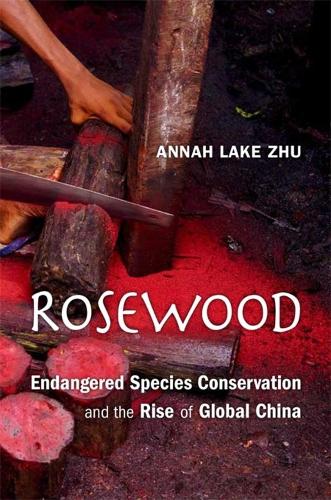
Книга Rosewood: Endangered Species Conservation and the Rise of Global China
A riveting study of the booming rosewood trade between China and Madagascar uncovers an alternative approach to environmentalism that disrupts Western models.
Rosewood is the world’s most trafficked endangered species by value, accounting for larger outlays than ivory, rhino horn, and big cats put together. Nearly all rosewood logs are sent to China, fueling a $26 billion market for classically styled furniture. Vast expeditions across Asia and Africa search for the majestic timber, and legions of Chinese ships sail for Madagascar, where rosewood is purchased straight from the forest.
The international response has been to interdict the trade, but in this incisive account Annah Lake Zhu suggests that environmentalists have misunderstood both the intent and the effect of China’s appetite for rosewood, causing social and ecological damage in the process. For one thing, Chinese consumers are understandably seeking to reclaim their cultural heritage, restoring a centuries-old tradition of home furnishing that the Cultural Revolution had condemned. In addition, Chinese firms are investing in environmental preservation. Far from simply exploiting the tree, businesses are carefully managing valuable forests and experimenting with extensive new plantings. This sustainable-use paradigm differs dramatically from the conservation norms preferred by Western-dominated NGOs, whose trade bans have prompted speculation and high prices, even encouraging criminal activity. Meanwhile, attempts to arm conservation task forces—militias meant to guard the forests—have backfired.
Drawing on years of fieldwork in China and Madagascar, Rosewood upends the pieties of the global aid industry. Zhu offers a rigorous look at what environmentalism and biodiversity protection might look like in a world no longer dominated by the West.
"Thought-provoking…Zhu has crafted a story that combines the legal, political, and economic aspects of rosewood in Madagascar. In the process, she does more than decenter the West; she presents an example of how we might recenter the site of valuable natural resources and the people who live and work there." - Natural Resources & Environment
"Read[s] like dispatches from a foreign correspondent: intrepid, open-minded, and sympathetic to her subjects. [Zhu’s] skill as an interlocutor makes for poignant reading." - Asian Review of Books
"Zhu explores the difference between the prevailing Western approach to protecting endangered species, which advocates trade bans and other protections, and the Chinese one, which promotes cultivation and sustainable use…Drawing on her fieldwork in Madagascar and China, Zhu advocates for a deeper and more sympathetic understanding of China’s view on endangered species and natural resources more broadly. Her book will no doubt be controversial, but it is an important and necessary contribution." - China Dialogue