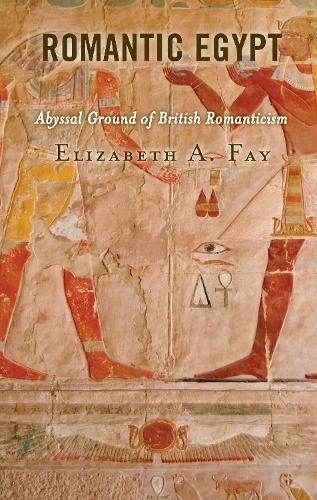
Книга Romantic Egypt: Abyssal Ground of British Romanticism
Romantic Egypt: Abyssal Ground of British Romanticism traces the historical, cultural and intellectual affiliations between Ancient Egypt and Romantic-period Britain and Germany, including the influences contributed by European thought, politics, and interventions such as Napoleon’s 1799 Egyptian Campaign. Until the contributions of Napoleon’s expedition to scientific knowledge of Ancient Egyptian monuments and ruins, Egypt had been largely swathed in mystical explanations of its past, its achievements, its beliefs, and its cultural importance; however, the increased knowledge about Ancient Egypt competed with the allure of a more mythically imbued antiquity in the Romantic imagination. Romantic Egypt argues that this balance between knowing and not-knowing, between deciphering and imagining a golden-age Egypt, between enlightened thought and mysticism, was essential to the development of the Romantic imaginary because, for the Romantics, western philosophy and art had their birth in the all-but-lost wisdom of Ancient Egypt.
"
Fay is a masterful guide with plentiful supply of enlightening fire and you can be sure you will never be in the dark—pardon the pun—when exploring the abyssal depths, labyrinths and necropoli of the Egypt: be it cosmic or terrestrial that so inspired the Romantics. Romantic Egypt opens the reader’s eyes to new and compelling interpretations of some of the best poetry and philosophy produced by the Romantics. Finally, Fay’s book is nothing short of a cultural masterpiece and should be compulsory reading for any student of the Romantic period or anyone who has a love for the cultural imagination of the West in relationship to Egypt.
" - VoegelinView"
Fay argues in the introduction that “imagining Ancient Egypt was fundamental to the development of Romanticism as a major intellectual and artistic movement.” In particular, she focuses on the mythical importance of Ancient Egypt for the Romantics in their quest to represent the lost origin of Western culture that was at once mysterious and incomprehensible but also imaginable. In the first three chapters Fay focuses on history, exploring the perception of Ancient Egypt among the Romantics, especially as an “originary moment in the history of civilization," a site of lost knowledge and of unknowability. In the last two chapters, Fay is concerned with language, first through the “occultation of Ancient Egypt” and then through examining the “prevalent conception of language as a writing system originating in hieroglyphics.” In an impressive move, the author brings European authors (Kant, Volney, Schelling, Hegel, Novalis) into a dialogue with British authors such a Blake, Wordsworth, Keats, and the Shelleys to create a rich literary and philosophical examination of Egypt, a neglected topic in Romantic-era studies. Her study also is of interest for the ways in which it intersects with colonial studies and poststructuralism. Highly recommended. Graduate students, researchers, faculty.
" - Choice Reviews