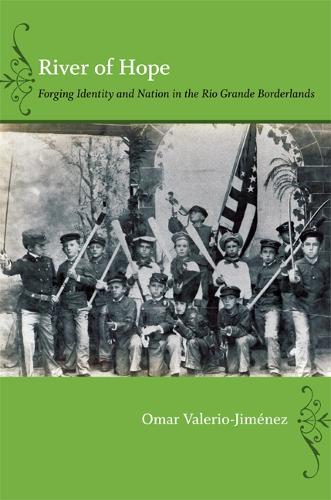
Книга River of Hope: Forging Identity and Nation in the Rio Grande Borderlands
Examines state formation, cultural change, and the construction of identity in the Lower Rio Grande region during the eighteenth and nineteenth centuries
In River of Hope, Omar S. Valerio-Jiménez examines state formation, cultural change, and the construction of identity in the lower Rio Grande region during the eighteenth and nineteenth centuries. He chronicles a history of violence resulting from multiple conquests, of resistance and accommodation to state power, and of changing ethnic and political identities. The redrawing of borders neither began nor ended the region's long history of unequal power relations. Nor did it lead residents to adopt singular colonial or national identities. Instead, their regionalism, transnational cultural practices, and kinship ties subverted state attempts to control and divide the population.
Diverse influences transformed the borderlands as Spain, Mexico, and the United States competed for control of the region. Indian slaves joined Spanish society; Mexicans allied with Indians to defend river communities; Anglo Americans and Mexicans intermarried and collaborated; and women sued to confront spousal abuse and to secure divorces. Drawn into multiple conflicts along the border, Mexican nationals and Mexican Texans (tejanos) took advantage of their transnational social relations and ambiguous citizenship to escape criminal prosecution, secure political refuge, and obtain economic opportunities. To confront the racialization of their cultural practices and their increasing criminalization, tejanos claimed citizenship rights within the United States and, in the process, created a new identity.
Published in cooperation with the William P. Clements Center for Southwest Studies, Southern Methodist University.
"“A first-rate analysis of the dynamic and varied ways that the inhabitants of the Rio Grande borderlands formulated their identities in relation to rapid and volatile geopolitical change.”" - American Historical Review
"“Deeply researched and elegantly written, this book is a required purchase for any border studies collection. Summing Up: Essential.”" - Choice
"“Scholars and students of western, borderlands, Native American, Chicana-Chicano, and gender history are the books[‘s] primary audience, but the explorations of identity, state power, individual agency, and gender will benefit scholars from a wide range of fields. … [It] provide[s] valuable insights into the uneven process of incorporation and the ways in which people negotiate their place between and in different empires and nation-states.” " - History: Reviews of New Books
"[A]n excellent historical backdrop to Mexican American civil rights history and contemporary discussions of Latina/o citizenship. Valerio-Jimenez's superb study will animate courses and appeal to readers interested in southern, borderlands, and Chicana/o history." - Journal of Southern History
"“Overall, this book is a good example of borderland studies that examine state formation and the construction of identity. The author uses a wide array of sources and places the history of the settlers in the region in the context of changing political authorities…. [I]t is a solid contribution to Chicano studies and borderlands history.”" - Southwestern Historical Quarterly
"“In sum, River of Hope provides us with an empirically rich and wonderfully argued examination of an understudied area of the Mexico-U.S. border region.”" - Western Historical Quarterly
"Wonderfully researched and engagingly written, River of Hope deserves to be read alongside other classic regional case studies of nineteenth-century American political life." - Hispanic American Historical Review
"This monograph delivers a pathbreaking analysis that leaves enough unexplored questions for future generations of scholars to elevate this borderland to one that should prove every bit as rich as the Mississippi River Delta, the Great Lakes, or the middle Rio Grande Valley." - Journal of American Ethnic History