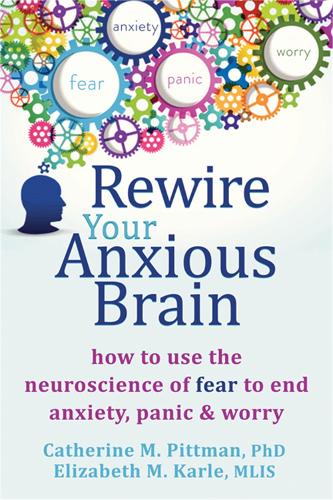
Книга Rewire Your Anxious Brain: How to Use the Neuroscience of Fear to End Anxiety, Panic and Worry
Feature in New Harbinger monthly e-Newsletter *Book Alert to Anxiety Disorders and CBT communities *Banner feature on New Harbinger website homepage *Goodreads giveaway Feature in New Harbinger monthly e-Newsletter *Book Alert to Anxiety Disorders and CBT communities *Banner feature on New Harbinger website homepage *Goodreads giveaway Print Ads: *Features in New Harbinger consumer and professional catalogs *Advertising in Psychotherapy Networker and the annual conference guides of the American Psychological Assocation and the Anxiety and Depression Assocation of America Publicity: *Print campaign to psychology, book trade, health, and science publications *Online campaign to psychology, self-help, anxiety, brain and mind, and science websites and blogs *Local TV and radio campaign *Outreach to brain science organizations TIPFeature in New Harbinger monthly e-Newsletter *Book Alert to Anxiety Disorders and CBT communities *Banner feature on New Harbinger website homepage *Goodreads giveaway Print Ads: *Features in New Harbinger consumer and professional catalogs *Advertising in Psychotherapy Networker and the annual conference guides of the American Psychological Assocation and the Anxiety and Depression Assocation of America
Do you ever wonder what is happening inside your brain when you feel anxious, panicked, and worried? In Rewire Your Anxious Brain, psychologist Catherine Pittman and author Elizabeth Karle offer a unique, evidence-based solution to overcoming anxiety based in cutting-edge neuroscience and research.
In the book, you will learn how the amygdala and cortex (both important parts of the brain) are essential players in the neuropsychology of anxiety. The amygdala acts as a primal response, and oftentimes, when this part of the brain processes fear, you may not even understand why you are afraid. By comparison, the cortex is the center of "worry."
That is obsessing, ruminating, and dwelling on things that may or may not happen. In the book, Pittman and Karle make it simple by offering specific examples of how to manage fear by tapping into both of these pathways in the brain.
As you read, you'll gain a greater understanding how anxiety is created in the brain, and as a result, you will feel empowered and motivated to overcome it. The brain is a powerful tool, and the more you work to change the way you respond to fear, the more resilient you will become. Using the practical self-assessments and proven-effective techniques in this book, you will learn to literally "rewire" the brain processes that lie at the root of your fears.