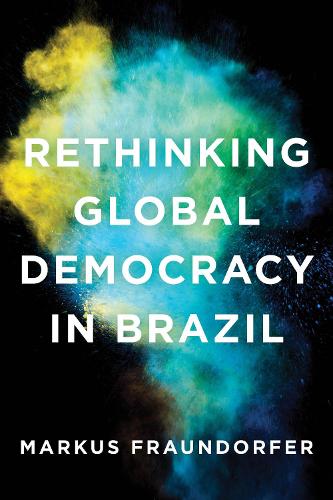
Книга Rethinking Global Democracy in Brazil
In recent years, a growing literature has focused on how to create more effective and democratic global governance mechanisms to better tackle global challenges such as health epidemics, global hunger, Internet surveillance or the consequences of climate change. Yet there is a gap in accessible published material to reflect contributions of democratic states from the global South. Among these democracies from the global South, Brazil is a popular case for teachers and researchers looking to study global governance mechanisms. This book provides students with a framework that challenges the Western-centred views on questions of how to democratise global governance processes, arguing that developing democracies from the global South have developed serious and sustainable approaches to a more democratic global system. With chapters on Brazil’s responses to global food security, the purchase of drugs, open government initiatives and internet governance, this book opens up contemporary and novel practices of democracy for examination.
"In Rethinking Global Democracy in Brazil, Fraundorfer finds reasons for hope that multilateral institutions will do a better and more evenhanded job at tackling pressing global problems by sharing power with civil society organizations and affected local communities. Fraundorfer closely examines four recent cases in which such interactions took place, all involving Brazil: the development of the World Health Organization–backed international drug purchase facility called Unitaid; the promulgation of rights-based doctrines by the UN’s Committee on World Food Security; the establishment of the eight-nation pro-transparency Open Government Partnership; and the NETmundial global meeting, a one-off effort to advance ethical Internet governance. During the reign of Lula’s Workers’ Party, Brazil served as a fascinating laboratory for these democracy-expanding innovations. Brazilian representatives, including Amorim, possessed the expertise and credibility to play leading roles in all four international exercises. To his credit, Fraundorfer recognizes that such experiments are extremely fragile, typically entail only voluntary commitments, produce more doctrinal posturing than policy implementation, and depend on the goodwill of progressive governments—which is currently in short supply." - Foreign Affairs