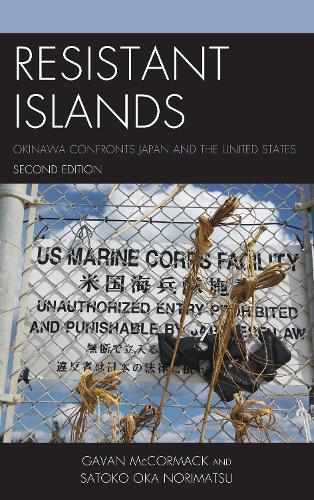
Книга Resistant Islands: Okinawa Confronts Japan and the United States
Now in a thoroughly updated edition, Resistant Islands offers the first comprehensive overview of Okinawan history from earliest times to the present, focusing especially on the recent period of colonization by Japan, its disastrous fate during World War II, and its current status as a glorified US military base. The base is a hot-button issue in Japan and has become more widely known in the wake of Japan’s 2011 natural disasters and the US military role in emergency relief. Okinawa rejects the base-dominated role allocated it by the US and Japanese governments under which priority attaches to its military functions, as a kind of stationary aircraft carrier. The result has been to throw US-Japan relations into crisis, bringing down one prime minister who tried to stop construction of yet another base on the island and threatening the incumbent if he is unable to deliver Okinawan approval of the new base. Okinawa thus has become a template for reassessing the troubled US-Japan relationship—indeed, the geopolitics of the US empire of bases in the Pacific.
"In recent years, the main source of friction in the US–Japanese defense relationship has been local opposition to the basing of U.S. marines on the Japanese island of Okinawa. . . . McCormack and Norimatsu lay bare the resentment’s deeper historical roots. . . . The larger frame for McCormack and Norimatsu’s analysis is their sharply worded indictment of the US–Japanese relationship, which they believe is constructed not so much to defend Japan as to serve a US forward deployment strategy aimed at Southeast Asia and China." - Foreign Affairs
"The US bases in Okinawa continue to be an irritant in bilateral relations. This book shifts our focus from Tokyo and Washington to the perceptions and grievances of Okinawans and why they oppose the US presence. The authors help readers understand a grassroots democratic movement challenging the garrison island status quo." - Japan Times
"Resistant Islands draws a wide picture around the efforts by the people of the Okinawa island chain, Japan's southernmost prefecture, to throw off the enormous US military presence lodged on their limited land area since the horrific battles of early 1945, when a quarter of the Okinawan population died as drafted civilian pawns in the defense." - Interpreter
"Resistant Islands offers unique perspectives on the island’s tragic history and current plight." - Asian Studies Review
"This book is essential reading for anyone interested in contemporary US-Japan relations. It draws on public statements and 'confidential' communications by officials of both governments . . . They reveal, in graphic detail and colorful language, the unrelieved condescension of US officials and the shameless subservience of their Japanese counterparts in this decidedly '[un]equal partnership.' The messages include 'secret accords' to maintain extraterritorial status for U.S. forces in Japan and to perpetuate the disproportionate US military presence in Okinawa with the option to introduce nuclear weapons even after its reversion to Japanese administration in 1972. . . .The most moving portions of this book are the personal statements by individuals who have resisted US and Japanese oppression through their public protests, their writings, and their policies as elected officials." - The Journal of Japanese Studies