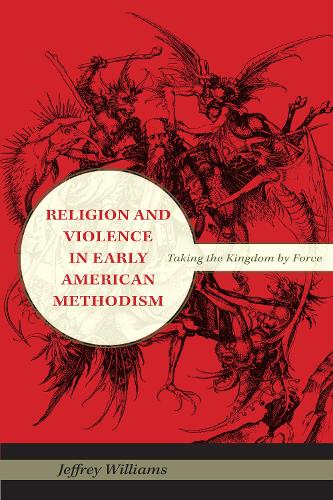
The rhetoric of war against sin and its impact on religious life
Early American Methodists commonly described their religious lives as great wars with sin and claimed they wrestled with God and Satan who assaulted them in terrible ways. Carefully examining a range of sources, including sermons, letters, autobiographies, journals, and hymns, Jeffrey Williams explores this violent aspect of American religious life and thought. Williams exposes Methodism's insistence that warfare was an inevitable part of Christian life and necessary for any person who sought God's redemption. He reveals a complex relationship between religion and violence, showing how violent expression helped to provide context and meaning to Methodist thought and practice, even as Methodist religious life was shaped by both peaceful and violent social action.
"
Williams sets out to remedy a perceived lack of attention to Methodist history. He provides an important contribution not only to Methodist history but to american religious and social history more broadly.June 2011
" - American Historical Review
"
[T]his well-researched and well-written . . . monograph [focuses] on the language of violence in American Methodist literature from the time of Methodist founders John and Charles Wesley to the Civil War. Williams's book reminds readers that Methodist religious experience was not always warm and sentimental but was originally one in which believers were at war within themselves and against sin in the world. . . . Highly recommended.
" - Choice
"
Those interested in religion and violence, and in locating a 'Methodist' strain in American culture, should read this book. Vol. 108, No. 3 Summer 2010
" - Register of the Kentucky Historical Society