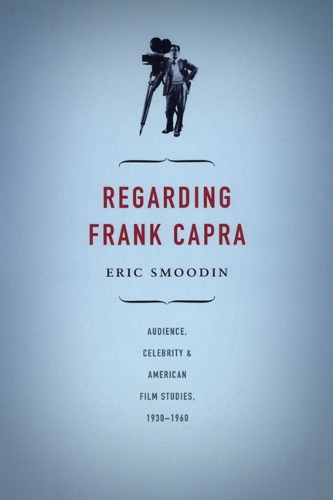
Книга Regarding Frank Capra: Audience, Celebrity, and American Film Studies, 1930–1960
Using extensive archival research in fan mail, fan magazines, army services and educational records, Smoodin explores the different reception of Capra films with different popular audiences, and how the films meanings were marshalled to a variety of natio
In this innovative historical examination of the American movie audience, Eric Smoodin focuses on reactions to the films of Frank Capra. Best known for his Hollywood features—including It Happened One Night, It’s a Wonderful Life, and Mr. Smith Goes to Washington—Capra also directed educational films, military films, and documentaries. Based on his analysis of the reception of a broad range of Capra’s films, Smoodin considers the preferences and attitudes toward Hollywood of the people who watched movies during the “Golden Age” of studio production, from 1930 to 1960.
Drawing on archival sources including fan letters, exhibitor reports, military and prison records, government and corporate documents, and trade journals, Smoodin explains how the venues where Capra’s films were seen and the strategies used to promote the films affected audience response and how, in turn, audience response shaped film production. He analyzes issues of foreign censorship and government intervention in the making of The Bitter Tea of General Yen; the response of high school students to It Happened One Night; fan engagement with the overtly political discourse of Meet John Doe and Mr. Smith Goes to Washington; San Quentin prisoners’ reaction to a special screening of It’s a Wonderful Life; and at&t’s involvement in Capra’s later documentary work for the Bell Science Series. He also looks at the reception of Capra’s series Why We Fight, used by the American military to train recruits and re-educate German prisoners of war. Illuminating the role of the famous director and his films in American culture, Regarding Frank Capra signals new directions for significant research on film reception and promotion.
"“Eric Smoodin’s excellent study of the many ways the films of director Frank Capra were perceived by audiences is important not only because it extends the contemporary project to understand film reception but also because it is sensitive to the ways the mass audience was partially shaped by historical contexts and discourses.”" - American Historical Review
"“Smoodin’s research effort was extensive. . . . [He] deserves high praise for seeing the unique opportunity this archival material provided. That is, in Capra’s case it is possible to trace the reception of his films in very concrete terms from early until late, in such a way as to offer a counter-account of the trajectory and meaning of his career. . . . Enthralling. . . .”" - Screening the Past
"“Smoodin’s text stretches impressively across the full gamut of Capra’s output, from the classic films to the educational shorts of the 1960s. All in all it is an engrossing work and one that should contribute immensely to these prominent questions of audience reception and the academic film studies agenda. It is also a book worthy of the director’s contribution to American cinema and should be invaluable reading for film scholars of all persuasions.”" - Journal of American Studies
"Capra and his films have been studied extensively but Smoodin takes a fresh rewarding approach. . . . Fascinating. . . . Smoodin provides a well-documented, clearly written study that not only enhances understanding of this significant director but also adds to the burgeoning field of reception studies. Highly recommended." - Choice