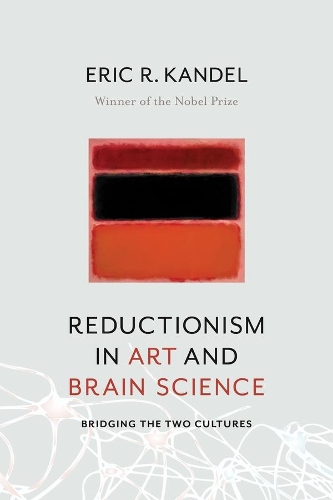
Книга Reductionism in Art and Brain Science: Bridging the Two Cultures
Are art and science separated by an unbridgeable divide? Can they find common ground? In this new book, neuroscientist Eric R. Kandel, whose remarkable scientific career and deep interest in art give him a unique perspective, demonstrates how science can inform the way we experience a work of art and seek to understand its meaning. Kandel illustrates how reductionism—the distillation of larger scientific or aesthetic concepts into smaller, more tractable components—has been used by scientists and artists alike to pursue their respective truths. He draws on his Nobel Prize-winning work revealing the neurobiological underpinnings of learning and memory in sea slugs to shed light on the complex workings of the mental processes of higher animals.
In Reductionism in Art and Brain Science, Kandel shows how this radically reductionist approach, applied to the most complex puzzle of our time—the brain—has been employed by modern artists who distill their subjective world into color, form, and light. Kandel demonstrates through bottom-up sensory and top-down cognitive functions how science can explore the complexities of human perception and help us to perceive, appreciate, and understand great works of art. At the heart of the book is an elegant elucidation of the contribution of reductionism to the evolution of modern art and its role in a monumental shift in artistic perspective. Reductionism steered the transition from figurative art to the first explorations of abstract art reflected in the works of Turner, Monet, Kandinsky, Schoenberg, and Mondrian. Kandel explains how, in the postwar era, Pollock, de Kooning, Rothko, Louis, Turrell, and Flavin used a reductionist approach to arrive at their abstract expressionism and how Katz, Warhol, Close, and Sandback built upon the advances of the New York School to reimagine figurative and minimal art. Featuring captivating drawings of the brain alongside full-color reproductions of modern art masterpieces, this book draws out the common concerns of science and art and how they illuminate each other.
"[A] fascinating survey of mind science and modern art.... Kandel presents concepts to ponder that may open new avenues of art making and neuroscientific endeavor." - Publishers Weekly
"[An] intriguing treatise." - Nature
"Recommended for those interested in the intersection of psychology and art." - Library Journal
"The effort to complete this book will be well rewarded.... C.P. Snow would be proud." - Neurology Today
"Unique and thought-provoking." - Times Higher Education
"Elegant and entertaining." - Wall Street Journal
"[Eric Kandel's] new book offers one of the freshest insights into art history in many years." - Salon
"A pleasure to read" - FASEB Journal
"The result is an intriguing, thought provoking book which will appeal to those with pre-existing knowledge but also to those who may be unfamiliar but curious." - The British Society for Literature and Science
"Kandel makes an important contribution with this book; he lucidly describes the very active interplay across disciplines that has taken place with regard to exploring how information is managed and understood, and then related across artistic mediums, scientific research, and socially, through sharing of ideas and findings." - PsycCritiques
"Kandel’s theory of how are our neurons fire in response to abstract art is illuminating. . . . One looks forward to hearing more from Kandel, a most inventive scholar, now that his bridge has been solidly built." - The New Criterion