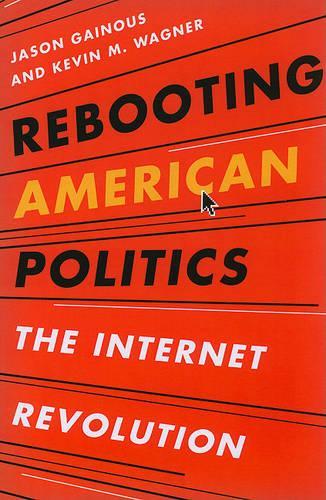
Going beyond theory and guess based forecasts; this book systematically explores and measures the implications of the growing use of the internet in the American political landscape. Using current election data, the authors specifically challenge the predominant conjecture that the impact of new technology will not affect the electoral outcomes and illustrate that the use of the internet is causing a marked shift in not just who votes, but who wins.
"Gainous (Univ. of Louisville) and Wagner (Florida Atlantic Univ.) clearly want to legitimize their assessment of the Internet as a "revolution" in politics as asserted in their title. Going beyond speculation and polemics, they valiantly attempt to back up their assertion with empirical data testing of hypotheses. Given the limitations of the data available from Pew Research Center surveys and localized student surveys, they are relatively successful. A number of key questions remain unanswered, but some new insights stand out. Some of the findings seem inconsistent both among samples and categories. For example, Hispanics are high Internet users, but this usage does not correlate with increased participation. Using technological change as an independent variable presents numerous challenges, many of which are frankly admitted. Placing the analysis in the context of previous research is helpful. The detailed methodological discussions within the book interrupt smooth reading, which might put off some readers. The discussion pays considerable attention to the causes and consequences of Internet usage for political purposes by the haves and the have-nots and how this might distort democratic government." - CHOICE