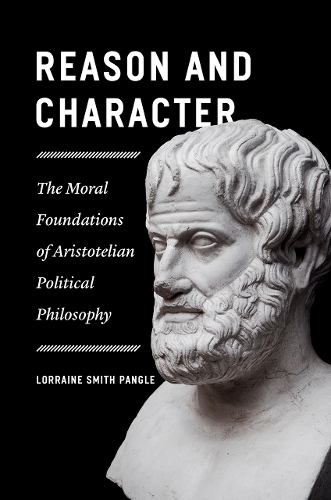
Книга Reason and Character: The Moral Foundations of Aristotelian Political Philosophy
A close and selective commentary on Aristotle’s Nicomachean Ethics, offering a novel interpretation of Aristotle’s teachings on the relation between reason and moral virtue.
What does it mean to live a good life or a happy life, and what part does reason play in the quest for fulfillment? Lorraine Smith Pangle shows how Aristotle’s arguments for virtue as the core of happiness and for reason as the guide to virtue emerge in response to Socrates’s paradoxical claim that virtue is knowledge and vice is ignorance.
Against Socrates, Aristotle does justice to the effectual truth of moral responsibility—that our characters do indeed depend on our own voluntary actions. But he also incorporates Socratic insights into the close interconnection of passion and judgment and the way passions and bad habits work not to overcome knowledge that remains intact but to corrupt the knowledge one thinks one has. Reason and Character presents fresh interpretations of Aristotle’s teaching on the character of moral judgment and moral choice, on the way reason finds the mean—especially in justice—and on the relation between practical and theoretical wisdom.
"Anyone working on the texts described would find them an invaluable aid. Philosophy students who are not reading Greek would also find them helpful gateways into Plato’s and Aristotle’s thoughts on these moral problems. [Pangle] quotes from other scholars generously, including when she disagrees, and her notes and references are extensive. This enterprise is exactly what she has said it is: the fruit of lengthy pondering on two difficult authors, in a notoriously problematic area of moral philosophy, leading to a new and illuminating synthesis between them." - Classics for All (Praise for Virtue is Knowledge and Reason and Character)
""Reason and Character is a challenging, searching, and meticulous examination of a classic text. It should be read by everyone who wishes to understand the Nicomachean Ethics."" - Claremont Review of Books
"Examining questions that have perplexed generations of scholars, Pangle offers a fresh approach not simply through careful attention to the inquiry’s dialectical nature, but through her own lively dialogue with Aristotle." - Review of Politics