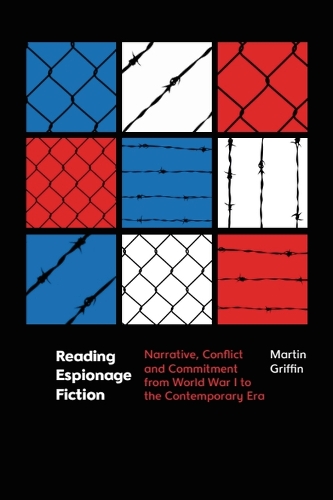
Книга Reading Espionage Fiction: Narrative, Conflict and Commitment from World War I to the Contemporary Era
Reading Espionage Fiction: Narrative, Conflict and Commitment from World War I to the Contemporary Era probes the ways in which the struggles and loyalties of political modernity have been portrayed in the espionage story over the course of the twentieth and twenty-first centuries. Reading works by authors such as Somerset Maugham, Helen MacInnes, John le Carre, Sam E. Greenlee and Gerald Seymour as popular literature deserving of sustained attention, this book shows how these narratives have both created a modern genre and, at the same time, sought an escape from its limitations. Martin Griffin takes up the importance of plot and character and argues that, in this branch of fiction, the personal has always and ever been political.Reading Espionage Fiction: Narrative, Conflict and Commitment from World War I to the Contemporary Era probes the ways in which the struggles and loyalties of political modernity have been portrayed in the espionage story over the course of the twentieth and twenty-first centuries. Reading works by authors such as Somerset Maugham, Helen MacInnes, John le Carré, Sam E. Greenlee and Gerald Seymour as popular literature deserving of sustained attention, this book shows how these narratives have both created a modern genre and, at the same time, sought an escape from its limitations. Martin Griffin takes up the importance of plot and character and argues that, in this branch of fiction, the personal has always and ever been political.
"Reading Espionage Fiction by Griffin (Univ. of Tennessee) is an excellent study of espionage fiction from WWI to the modern era. Griffin explores ideas about plot and plotting, the spy as the embodiment of international war on a small scale, and most importantly, a reading of espionage fiction as literature rather than mere genre fiction. As Griffin puts it, his book is “an experiment in thinking beyond genre but without ignoring its legacy or affordances” (p. 5). To that end, he eschews populist authors like Ian Fleming and Robert Ludlum to focus on literary authors like W. Somerset Maugham, John le Carré, and Gerald Seymour. There are chapters on English nationalism in WW I, the interwar fiction that seemed to prophecy WW II, the playful postmodern novels that stretch the genre to its limits, and the experiences of African Americans and women in espionage fiction. Griffin’s most effective argument is that spy fiction exposes, on a narrative level, the political ideologies that cause large-scale conflict. Griffin’s book is a rich survey of espionage fiction and its literary and political dimensions. Summing Up: Highly recommended." - CHOICE