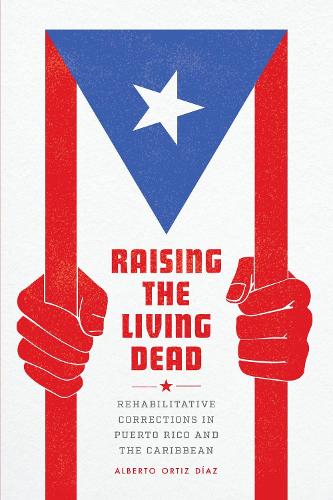
Книга Raising the Living Dead: Rehabilitative Corrections in Puerto Rico and the Caribbean
An eye-opening look at how incarcerated people, health professionals, and others behind and beyond bars came together to problem-solve incarceration.
Raising the Living Dead is a history of Puerto Rico’s carceral rehabilitation system that brings to life the interactions of incarcerated people, their wider social networks, and health care professionals. Alberto Ortiz Díaz describes the ways that multiple communities of care came together both inside and outside of prisons to imagine and enact solution-oriented cultures of rehabilitation from the 1930s to the 1960s. Scientific and humanistic approaches to well-being were deliberately fused to raise the “living dead,” an expression that reemerged in the modern Caribbean to refer to prisoners. These reform groups sought to raise incarcerated people physically, mentally, socially, spiritually, and civically.
The book is based on deep, original archival research into the Oso Blanco (White Bear) penitentiary in Puerto Rico, yet it situates its study within Puerto Rico’s broader carceral archipelago and other Caribbean prisons. The agents of this history include not only physical health professionals, but also psychologists and psychiatrists, social workers, spiritual and religious practitioners, and, of course, the prisoners and their families. By following all these groups and emphasizing the interpersonal exercise of power, Ortiz Díaz tells a story that goes beyond debates about structural and social control.
The book addresses key issues in the history of prisons and the histories of medicine and belief, including how prisoners’ different racial, class, and cultural identities shaped their incarceration and how professionals living in a colonial society dealt with the challenge of rehabilitating prisoners for citizenship.
Raising the Living Dead is not just about convicts, their immediate interlocutors, and their contexts, however, but about how together these open a window into the history of social uplift projects within the (neo)colonial societies of the Caribbean. There is no book like this in Caribbean historiography; few examine these themes in the larger literature on the history of prisons.
"“Humanizing and nuanced . . . [Ortiz’s] overarching approach, centered on human action, agency and (self-)determination, will inspire many with its obvious relevance to the present and future of mass incarceration. In this vital and public-facing conversation, Ortiz’s voice and scholarship will undoubtedly be not only welcome, but essential.”" - Social History of Medicine
"“Ortiz Díaz successfully emphasized the role of colonialism in correctional practices during the mid-twentieth century and how they remain today. The inclusion of the names of the people who experienced institutionalization and how they strived toward rehabilitation in Puerto Rico makes Raising the Living Dead standout. Ortiz Díaz recounts how medical, psychological, legal, and communal efforts contributed to the revival of the incarcerated in Oso Blanco, and sometimes back into Puerto Rican communities. Producing individual case studies that give context to the many rehabilitative procedures situates the reader as if they themselves are also with the living dead. . . . This book is significant in that it provides an in-depth evaluation of the incarcerated bodies through archival research—a methodological tool that consistently provides value to other ways of knowing the historical elements of crime, punishment, and those marginally affected by it.” " - Criminal Justice Policy Review