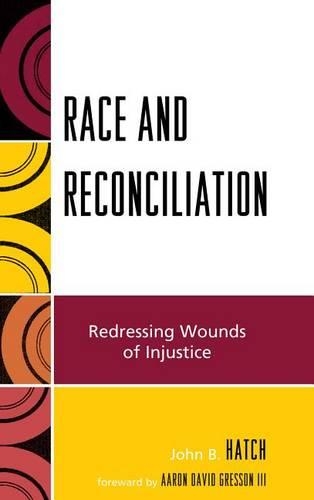
Книга Race and Reconciliation: Redressing Wounds of Injustice
In this enlightening and insightful monograph, John B. Hatch analyzes various public discourses that have attempted to address the racialized legacy of slavery, from West Africa to the United States, and in doing so, proposes a rhetorical theory of reconciliation. Recognizing the impact both of religious traditions and modern social values on the dialogue of reconciliation, Hatch examines these influences in tandem with contemporary critical race theory. Hatch explores the social-psychological and ethical challenges of racial reconciliation in light of work by Mark McPhail, Kenneth Burke, Paul Ricoeur, and others. He then develops his own framework for understanding reconciliation_both as the recovery of a coherent ethical grammar and as a process of rhetorical interaction and hermeneutic reorientation through apology, forgiveness, reparations, symbolic healing, and related genres of reparative action. What emerges from this work is a profound vision for the prospects of meaningful redress and reconciliation in American race relations.
"Hatch provides a cogent and thoughtful synthesis of thinking to date on the rhetoric of reconciliation…. Love, without question, is a powerful force in reconciliation, and the challenge to scholars will be to work from Hatch's foundational study to develop a host of approaches to racial reconciliation that do not presume love or a concern for the Other." - Discourse & Society
"In a fluid, engrossing tome, Hatch blends communication theories and their philosophical underpinnings, to recent global and national events about which many readers will likely be unaware, to underscore the processes by which racial reconciliation has at last found hope and promise in the United States…. Race and Reconciliation is written for communication scholars and academics of other disciplines studying the democratic possibilities for peace amid violence. It is a book that speaks as well to political leaders and community activists working to advance social justice to remedy the disparities among racial groups that continue to grow despite well intended social services and remediation efforts that have fallen short of making adequate progress…. The theoretical arguments are compelling…. That a rhetoric of reconciliation might open a door previously closed tight, however, is testimony to the power of communication to draw from its ethical foundation and discourse alternatives to change the frame and understanding of history so that we may consider the resent anew with a greater care for social justice to those for whom it has long been denied." - Argumentation and Advocacy
"Race and Reconciliation offers a compelling and comprehensive theoretical framework for addressing not only the structural and economic elements of racism - unfair laws or inadequate education - but also the 'unconfessed guilt and shame, unforgiven wrongs, unhealed emotional wounds, and incompletely redressed injustices,' phenomena that 'persist through generations as a sort of spiritual connection of psychic legacy that is not easily shaken'…. Hatch's book is well-written, with language that movingly conveys the urgency of his topic. The analysis of the Benin conference and subsequent official apologies in the United States is particularly compelling. The theoretical section is dense and draws upon a remarkable array of literature…. Hatch's work should be of great interest to scholars concerned with race and society. Much more, it offers a potential framework through which local and national leaders might address the lingering psychic wounds and material injustices caused by this most crucial part of our nation's history." - Rhetoric & Public Affairs